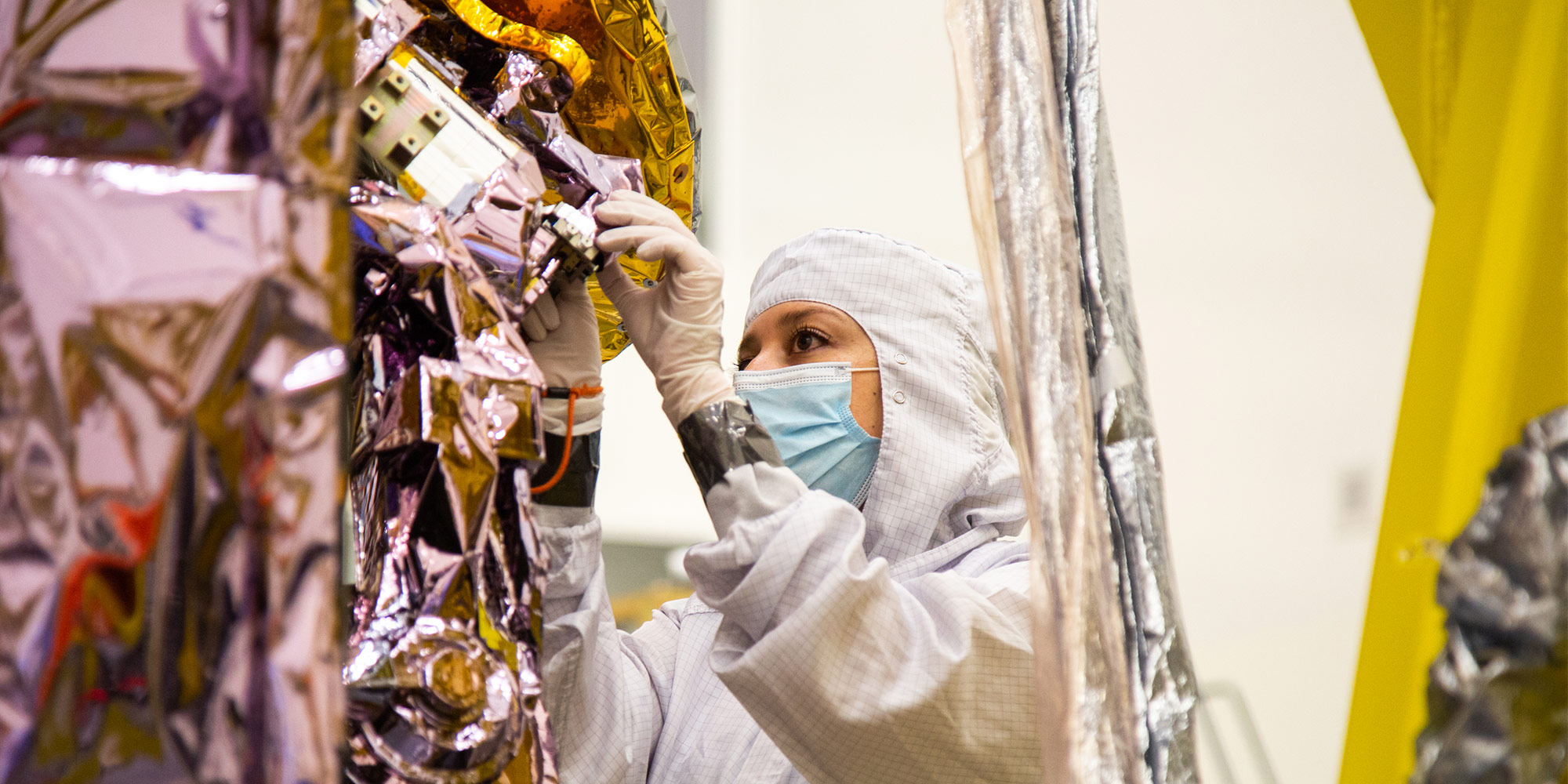
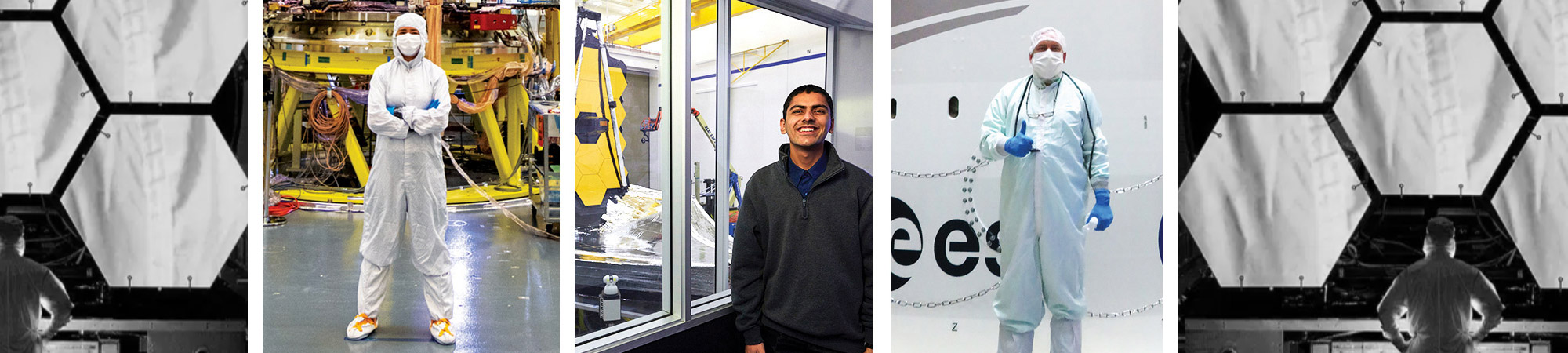
Meet four of the people who played critical roles in making Webb’s launch a success.
Webb's Backbone
By Amanda Collins
The James Webb Space Telescope (Webb) is the closest thing we have to time travel, capturing images that offer a glimpse of the origins of the universe.
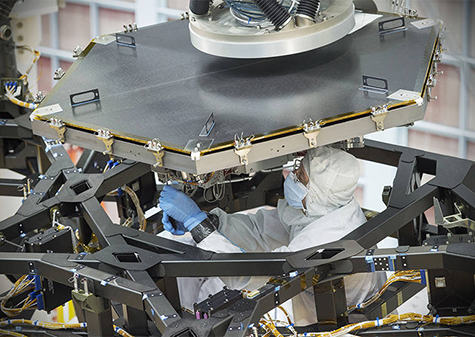
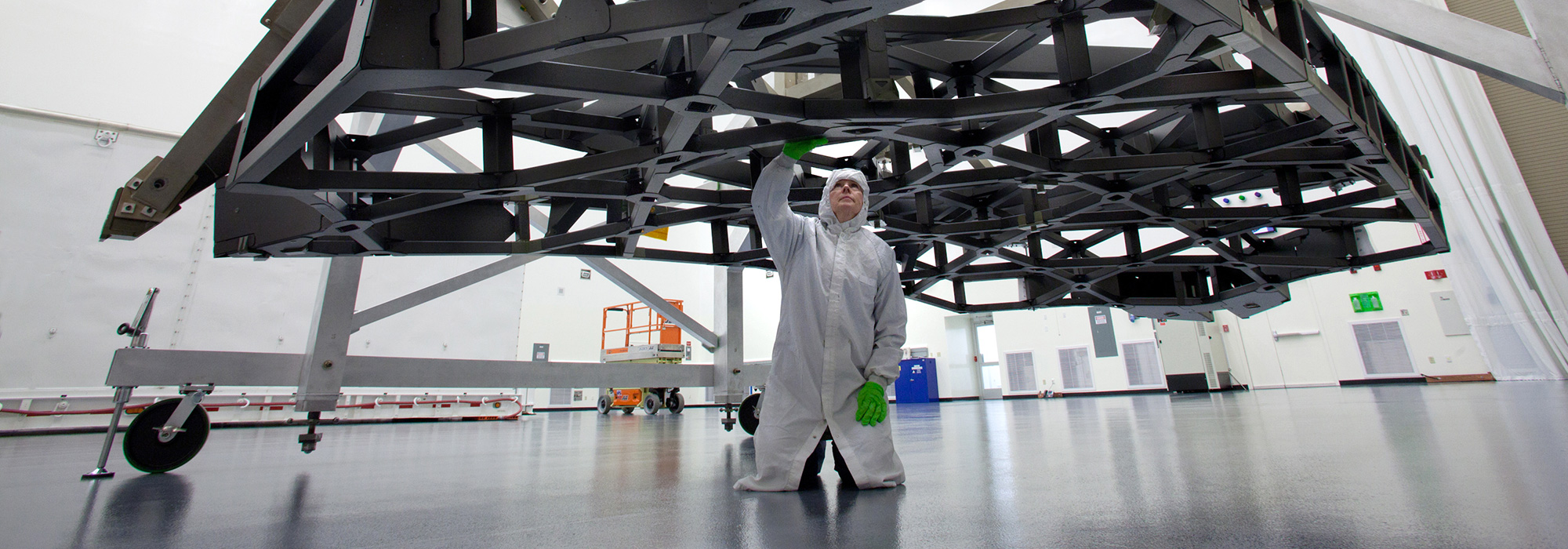
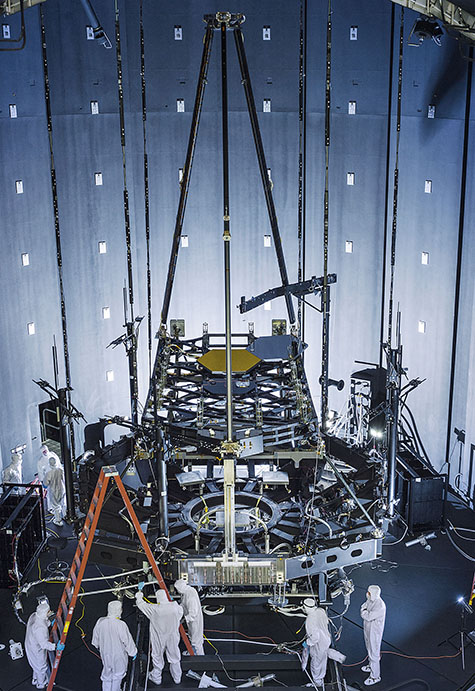
It’s no accident that Webb’s images are so crisp. This ability is made possible in part by Webb’s revolutionary structures: the backplane and integrated science instrument module which hold the spacecraft motionless so it can see far into deep space. These support structures — and the people who engineered them — are the unsung heroes of Webb’s stellar performance.
Design Innovation
Program Manager Bob Hellekson has been with Webb’s composite structures program since the beginning.
“Webb is the equivalent of our Super Bowl win,” said Bob, although he noted that even that comparison doesn’t do Webb’s significance justice. “Webb is a point of pride for all Northrop Grumman employees – whether you worked directly on it or not, chances are, you’ve been touched by its success.”
The optical precision needed by Webb is unprecedented. Carrying 2.5 tons of hardware, the structures cannot expand or contract more than 1/10,000 of the diameter of a human hair despite extreme temperatures of below -400 degrees Fahrenheit.
Lightweight graphite composites were a natural choice for the structures because these composites are very strong and barely respond to differences in temperature. The open framework of the design allowed technicians to move freely inside the structure during spacecraft integration and kept the lines of sight from the telescope to the spacecraft instruments clear.
Still, holding Webb steady enough to erase the boundaries of our known universe required results far beyond your average composite. Even with the right starting material, the design and manufacturing had to be innovative.
“It’s not just the materials, it’s the assembly,” said Brian Jahne, the lead mechanical design engineer on the composite structures.
Too much adhesive wouldn’t survive the icy recesses of space, but too little adhesive could mean the bond might not survive the stresses of the launch. Get the glue too close to the edge of the seam and it’s game over.
“We had to develop a new way of injection bonding to precisely control the spread of the adhesive,” said Brian, recalling one of the team’s many innovations that supported successful assembly.