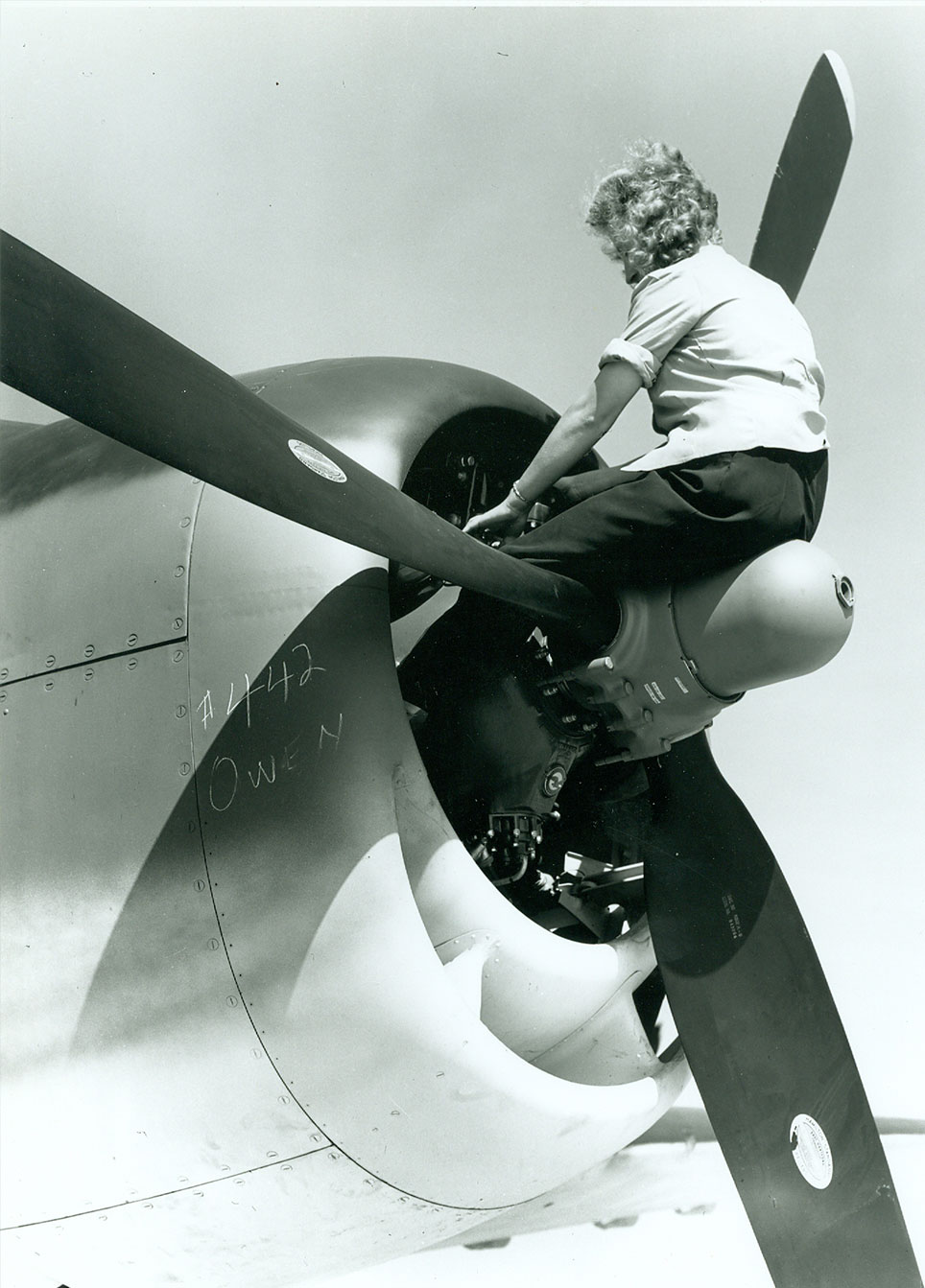
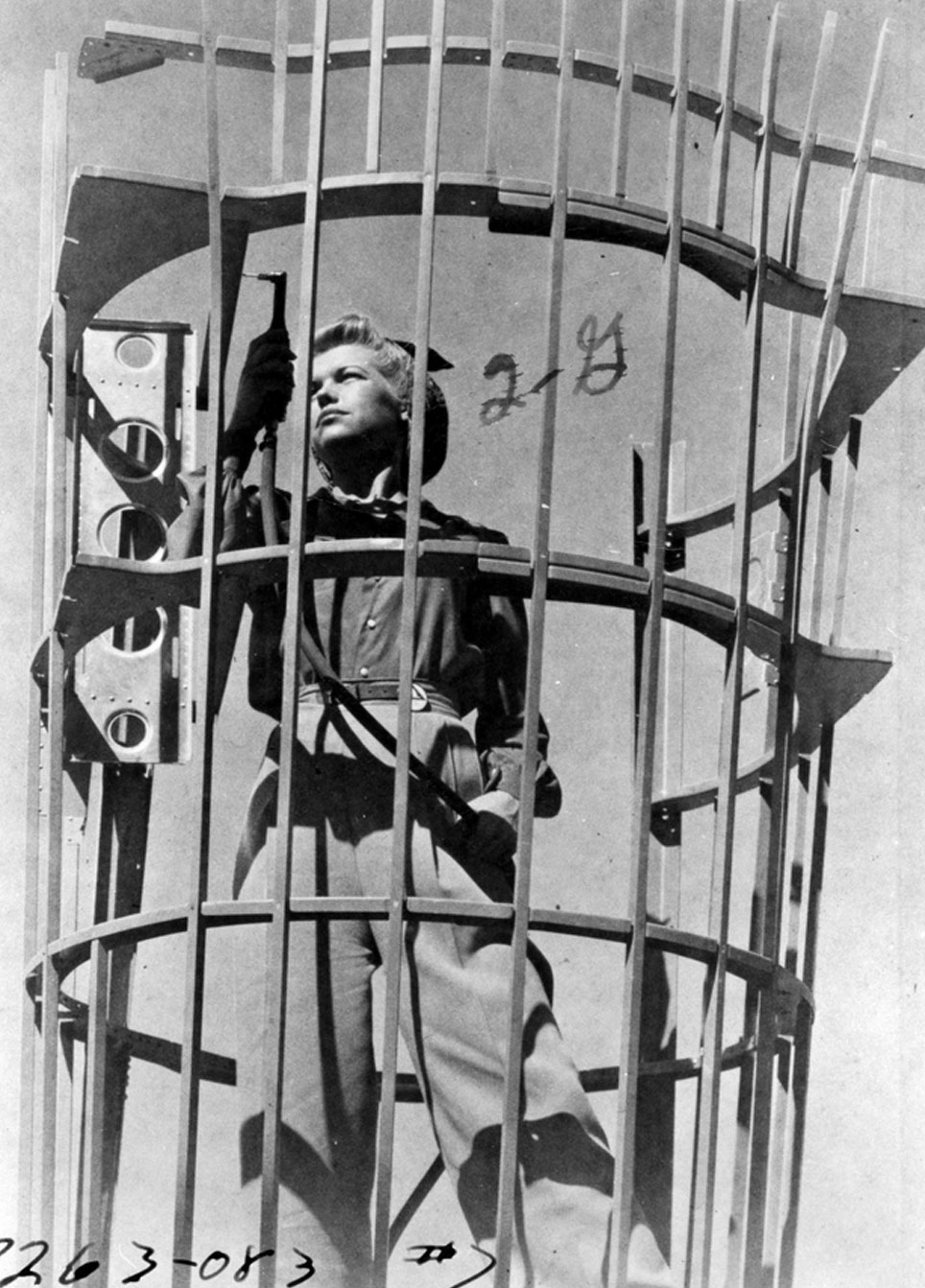
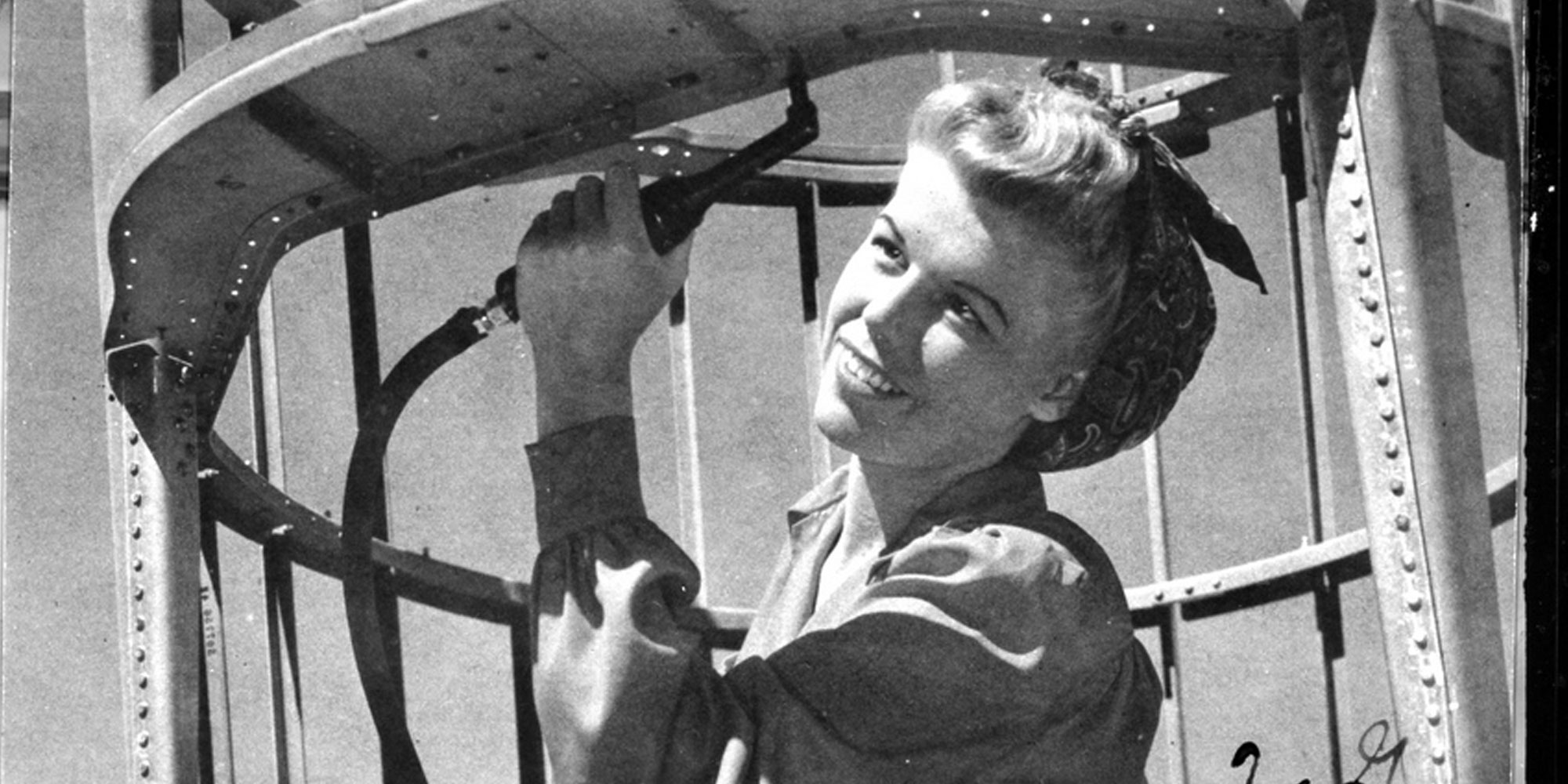
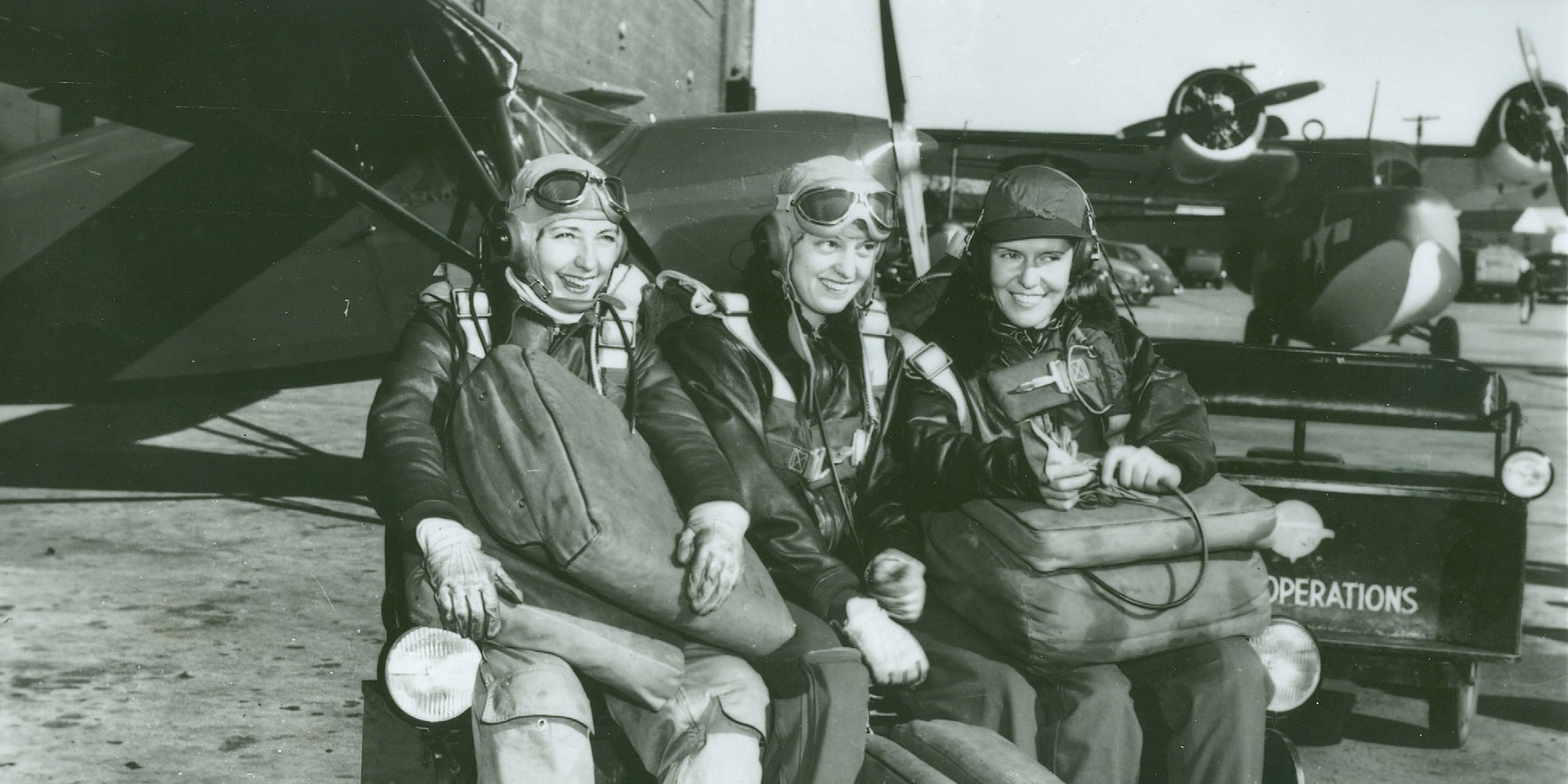
The United States entered World War II in December 1941 and, the following year, Grumman War Production Corps hired its first female employee. By April 1943, Grumman’s female employees counted in the thousands, and the company was recruiting 5,000 additional women to meet increased production demand. To support their new female workforce, the company established nursery schools for the employees’ children, organized women’s sports leagues and offered on-site counseling to help female employees transition into their new roles.
Across the country, in Burbank, California, Radioplane — a target drone manufacturer that was acquired by Northrop in 1952 — also employed many women, including Norma Jean Dougherty. Norma, the wife of a merchant marine, inspected and sprayed parachutes with fire retardant; a photograph of her at work helped launch her Hollywood career as Marilyn Monroe.
Like Norma Jean, many of the women had personal connections to the war — fathers, partners or loved ones who were serving or had died in combat — and took these roles to play their part in the war effort.
“I felt that my husband was doing his share and there was no reason for me to stay at home,” bench worker and military spouse Claire Van Derlofske told “Grumman Plane News” in April 1943. “I like my job very much because I feel that I am really helping my husband.”
These roles were also an opportunity to learn new skills. Many of the new female employees had no prior technical experience, but accounts from the time praise their ability to tackle new challenges with enthusiasm. As just one example, a team of Grumman female employees won a riveting contest at a War Exposition in Nassau, New York, driving 187 perfect rivets in just 10 minutes. Notably, Martha Mystowski, who operated the riveting gun, had never worked with that type of rivet prior to the competition.
“I was scared but decided to take a deep breath and forget that people were watching me,” Martha told “Grumman Plane News.” “You just can’t drive rivets with a shaky hand.”