A Hands-on STEM Education
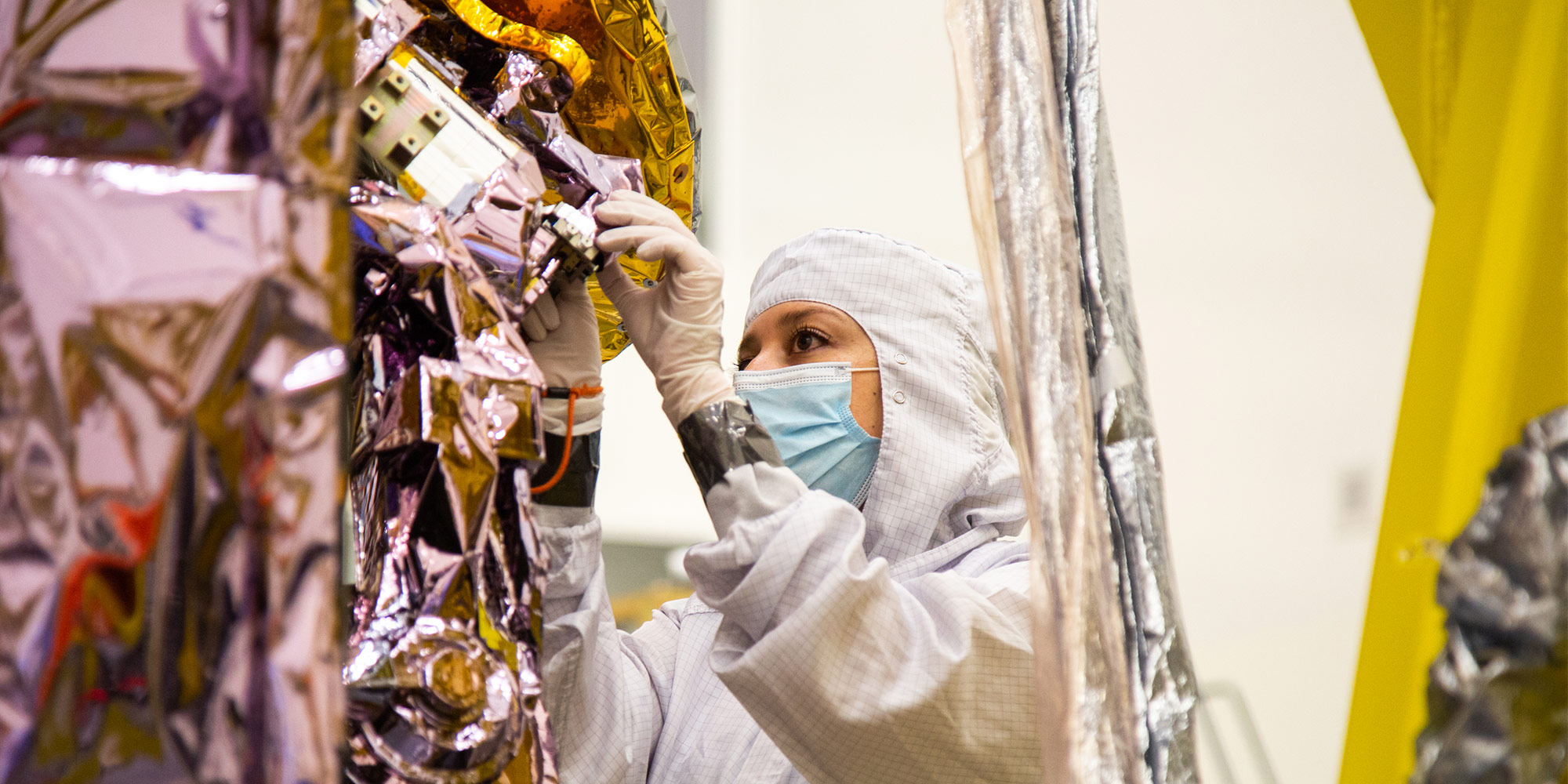
As Burt emphasizes, the process of reassembling segments into a complete SRB is a delicate and highly skilled task. This is where STEM education comes into the picture.
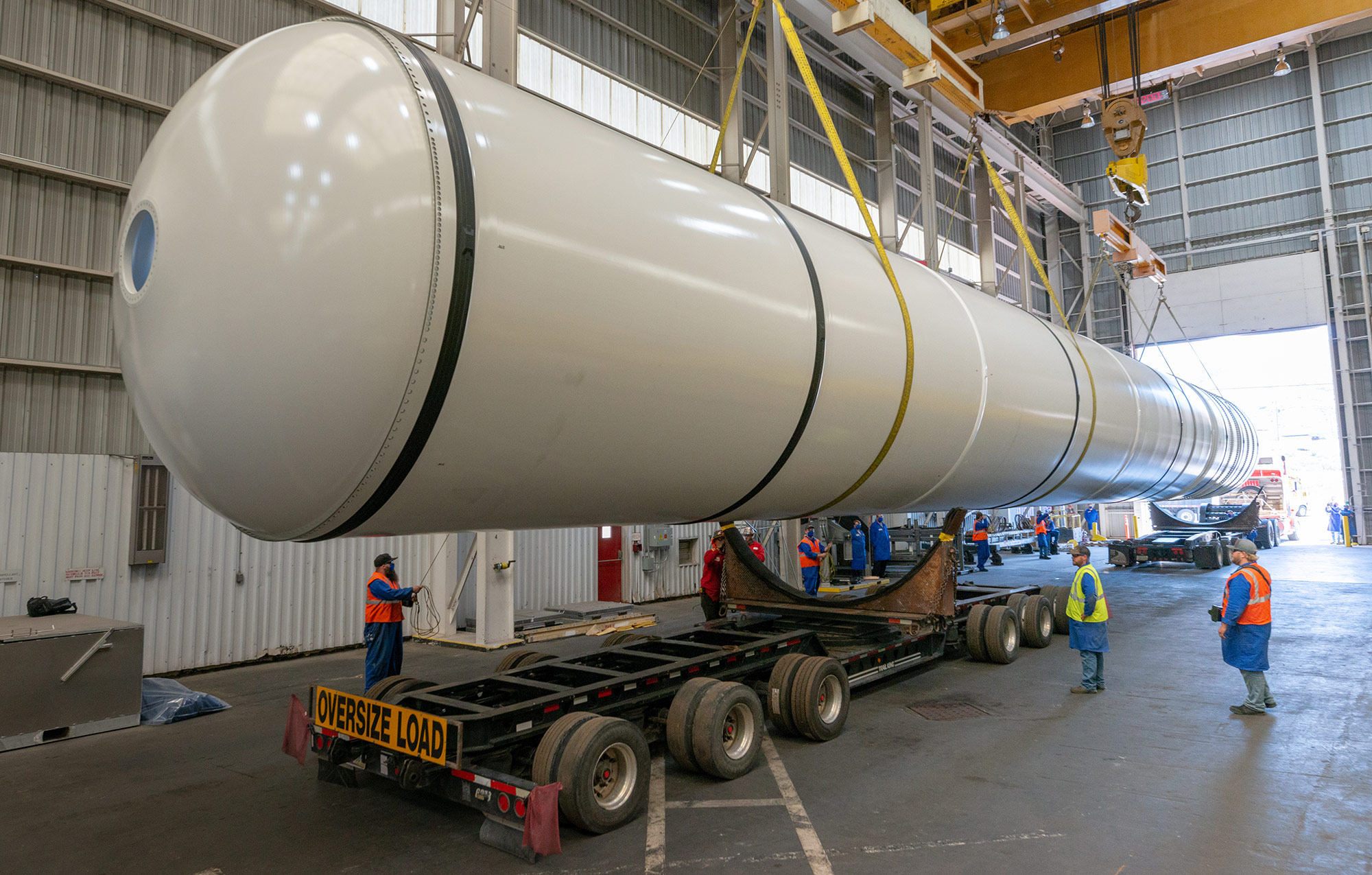
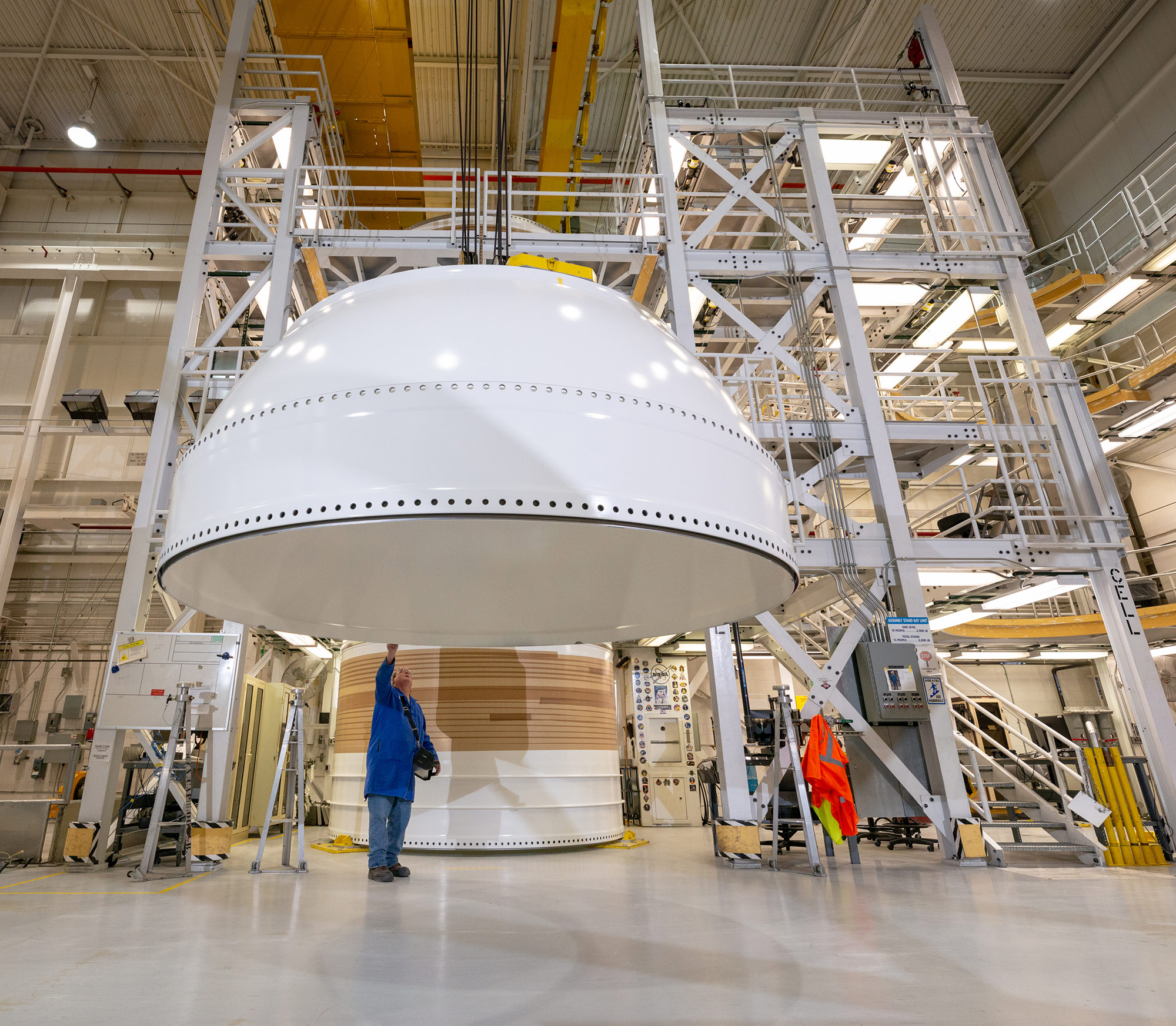
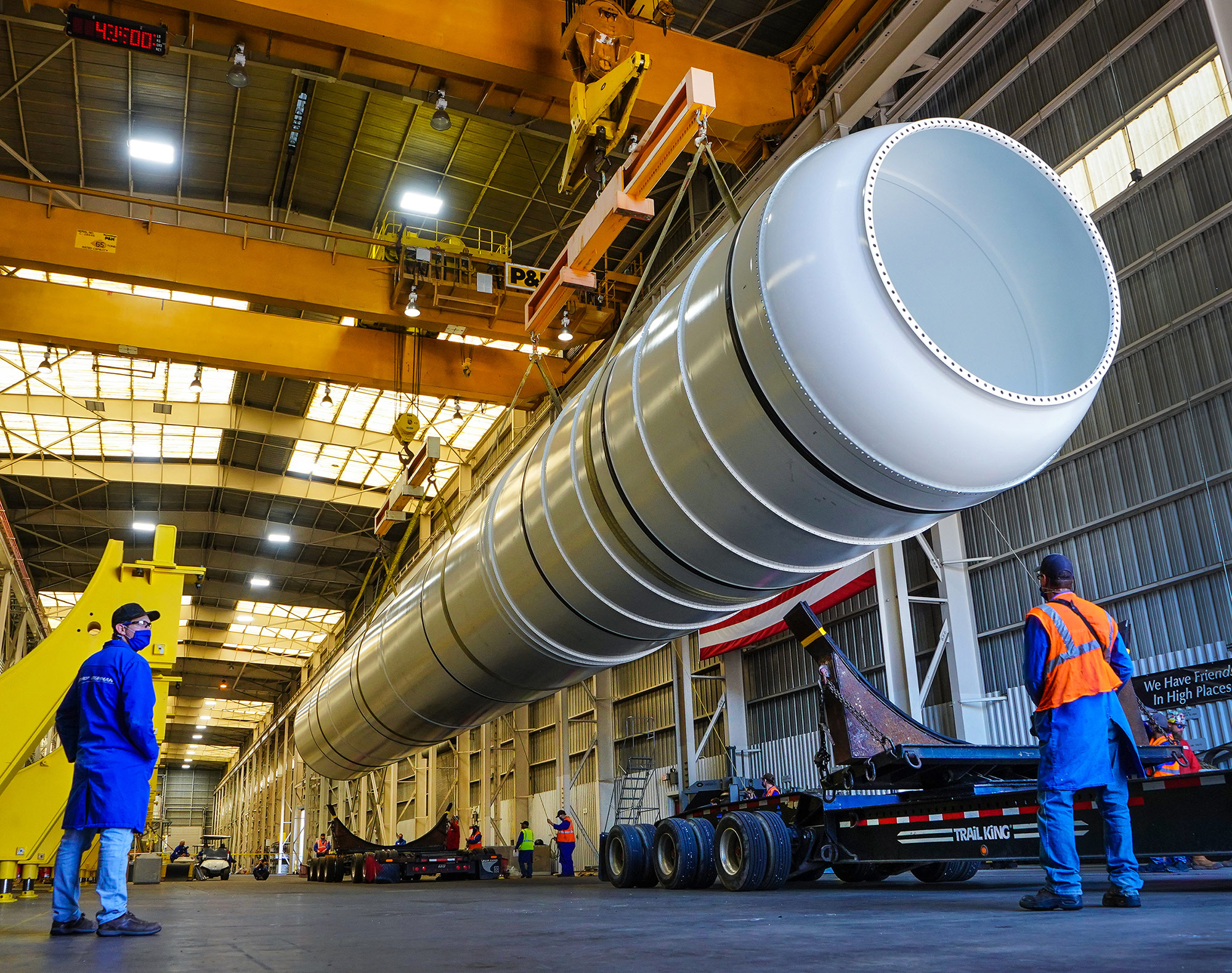
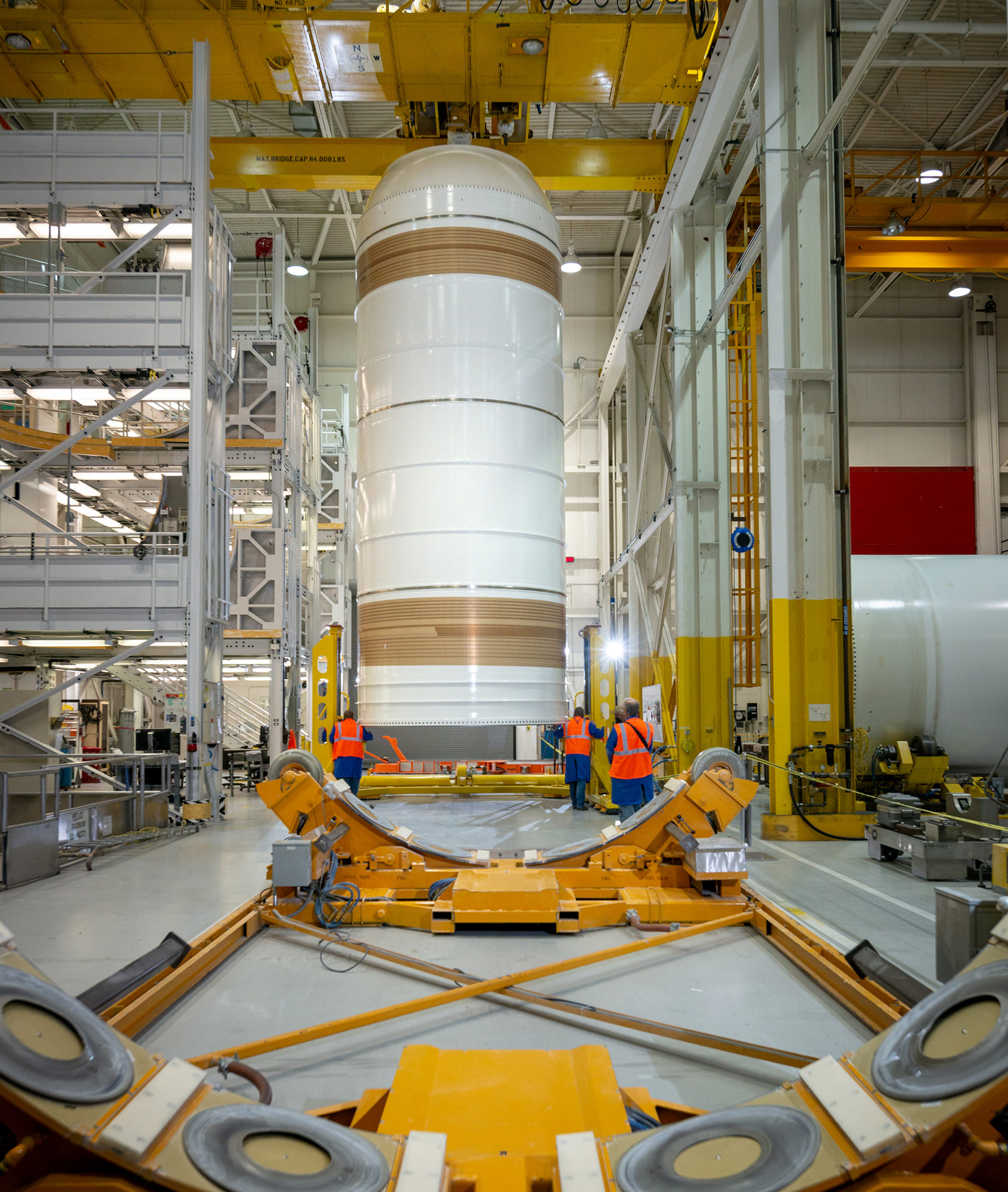
Amid a heavy schedule of ongoing development work at Northrop Grumman's Utah test facility, prepping the donated SRB segments for transport to California called for some creative workarounds. Because the static test installations normally used for assembly were booked up with new projects, the donated segments were instead rejoined in a facility called the Large Motor Casting Pit, normally used for filling the SRB structure with the solid rocket fuel that will launch it into space.
The donated SRBs contain no rocket fuel and are thus much safer to work with than fueled SRBs. But the reassembly process is just as demanding and delicate — and an ideal training environment for a new generation of technicians to learn the skills and techniques they will need to prep SLS boosters for upcoming Artemis missions.
As Charlie Burt describes this process, he also provides a quick education in the subtleties of space development terminology. The technicians who assemble the SRBs are operators in the specialized language of quality control. And in speaking of the ongoing evolution of space technology, Burt makes a careful distinction between verification and development and, alternately, qualification — a term that, to the professionals, connotes a later stage of a program that is starting to move toward the launch pad.
As for the donated SRBs, they will be incorporated into one of only two exhibits nationwide that will display Shuttles in their launch configuration. There, they will perform their final mission of inspiring a new generation of space scientists, engineers and explorers.