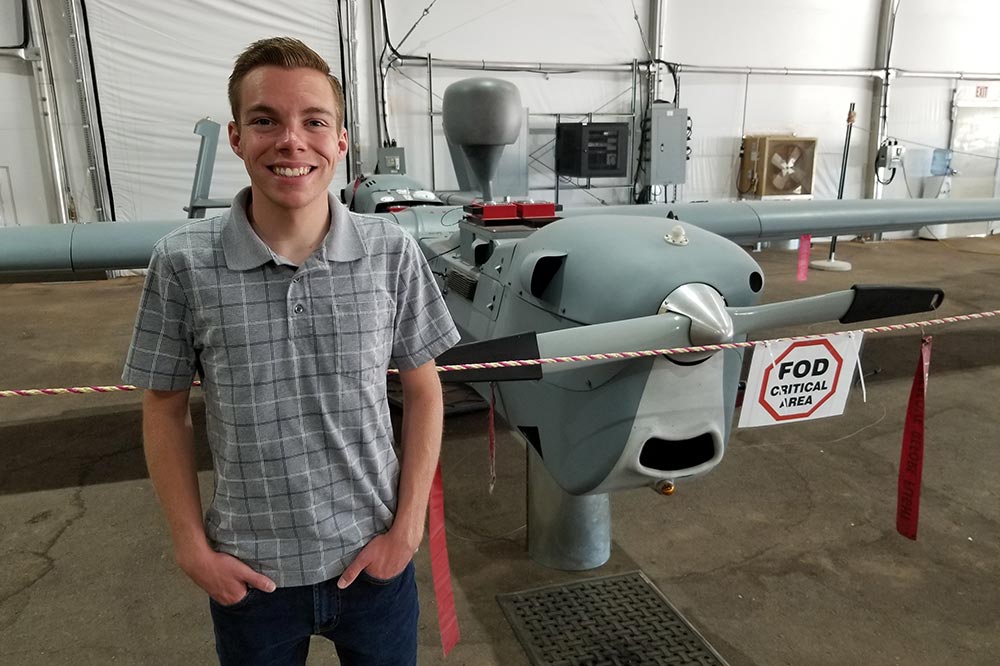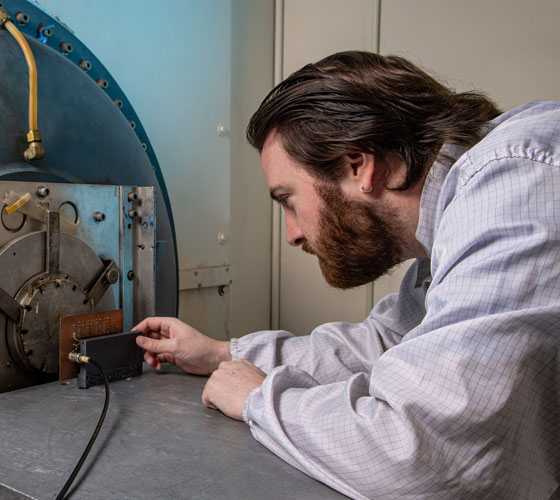
Radiation Test Engineer Taylor Fry is the only former astronomy adjunct professor in Northrop Grumman’s Radiation Test Operations Lab.
Clearing the Skies
Predicting and Preventing Contrails
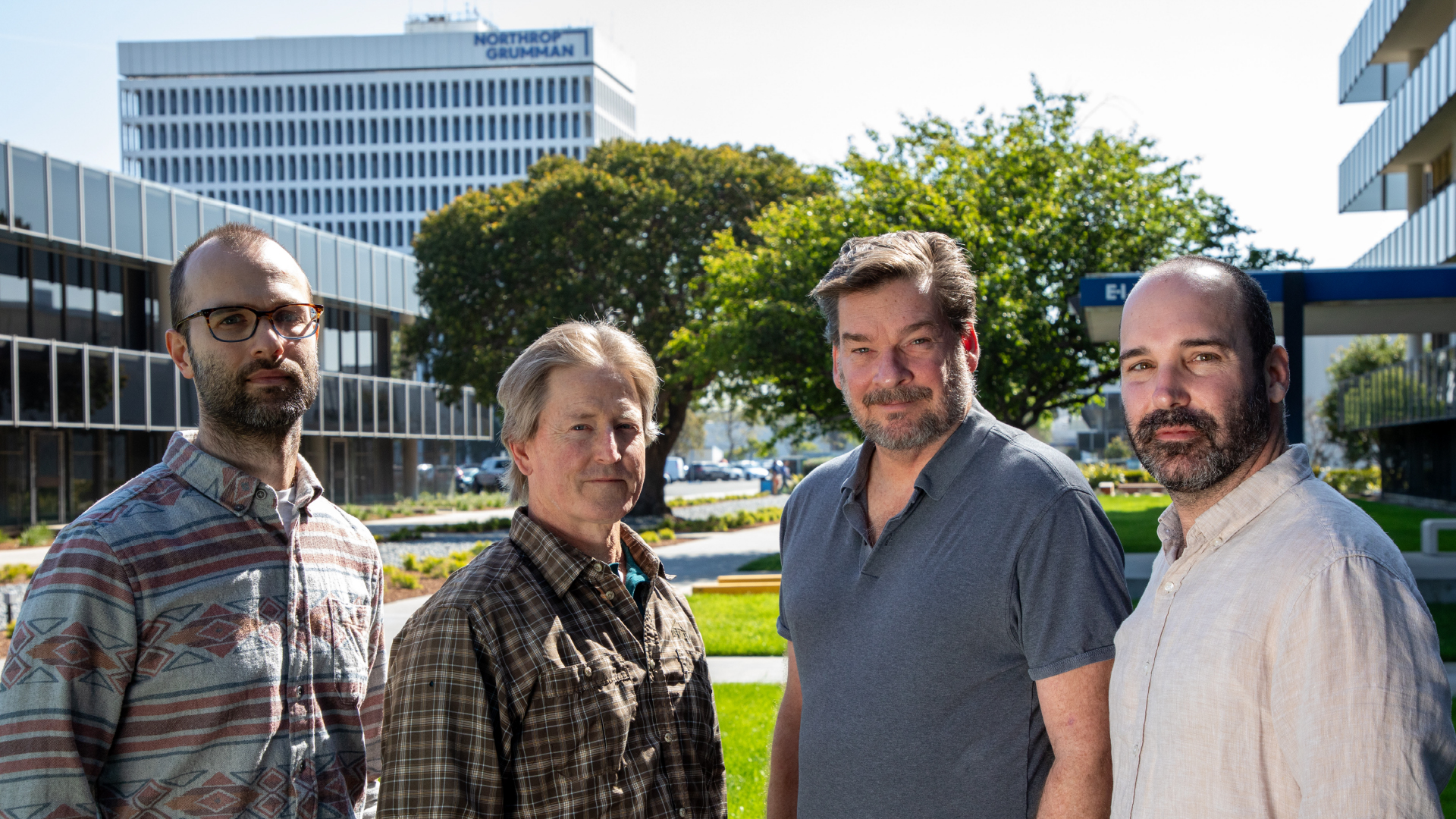
By Nestor Vences Gonzalez
The white lines etched across the sky by airplanes are a type of plane emission known as contrails and a team at Northrop Grumman is studying how to predict and prevent them — offering a new approach to reducing aviation’s impact on our skies.
Condensation trails, or contrails, are created by an aircraft’s exhaust and can trap energy in the Earth's atmosphere.
Scientists have understood how to predict contrail formation since the 1940s. However, persistent contrails — which create cloud lines across the sky — are not as easy to predict.
Today, pilots, air traffic controllers and aerospace system designers have no way of knowing whether a flight will form these persistent contrails.
"If we can find a way to predict the conditions, then pilots can avoid creating them,” said Bill Deal, a Northrop Grumman engineering fellow who is on the team working with NASA’s Jet Propulsion Laboratory. “No one has tried to implement our unique approach.”
Tale of Tails
Scientists and engineers have documented contrails since high-altitude flights began in the1920s, but their impact remained largely unexplored. During World War II, increased aircraft use brought contrails into focus, as they made it easier for adversaries to detect incoming aircraft and disrupted formation flying.
Researchers wanted to learn why and how they formed. In the 1940s, they found that contrails form when the warm exhaust of an airplane engine mixes with the cold air at high altitudes.
“What is left behind is a visible trail of ice crystals and soot,” Bill said.
For the most part, contrails dissipate within minutes. But under the right conditions, they persist and evolve into aircraft-induced cirrus clouds (AICs), which reflecting incoming sunlight or prevent outgoing radiation.