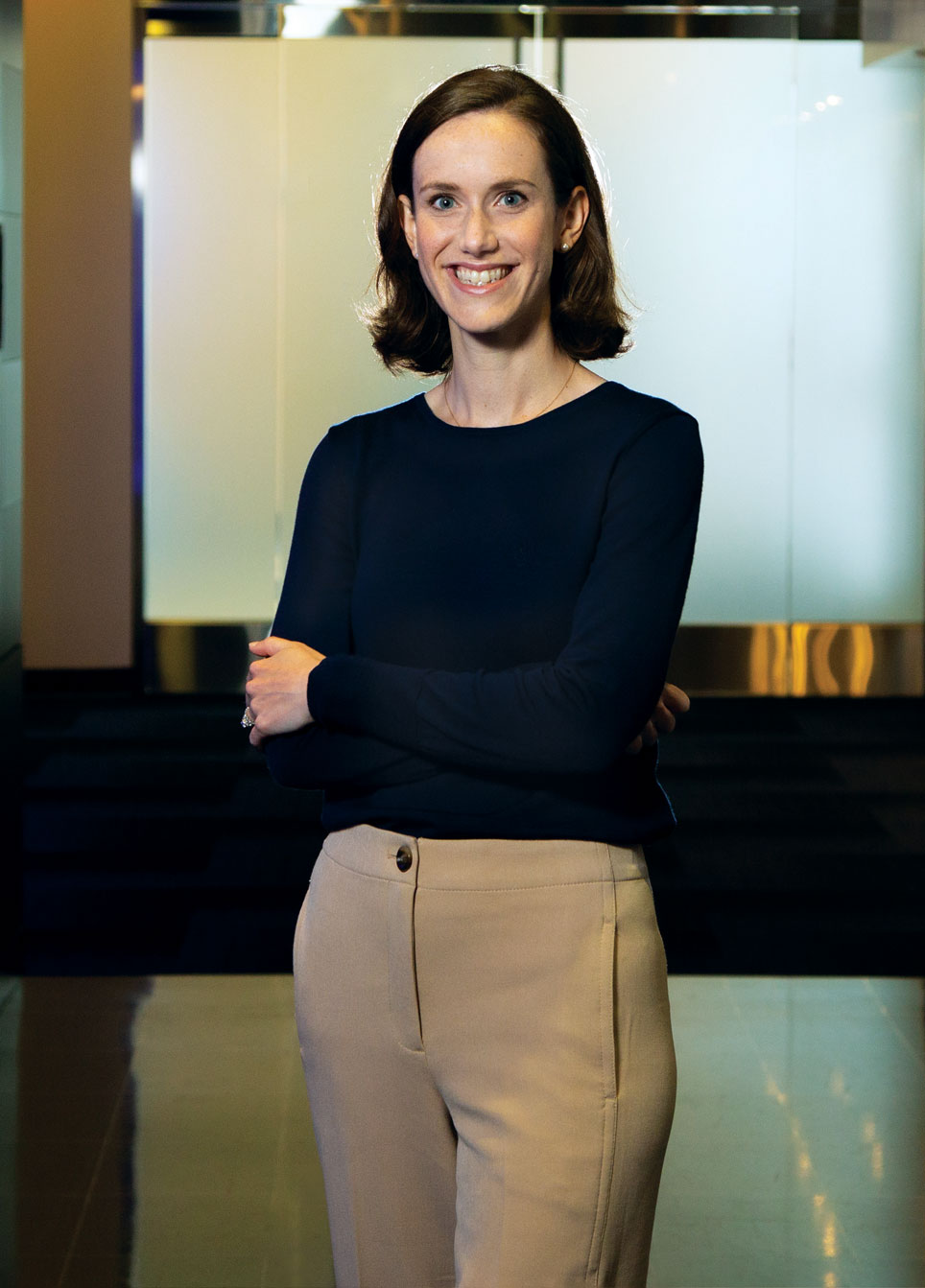
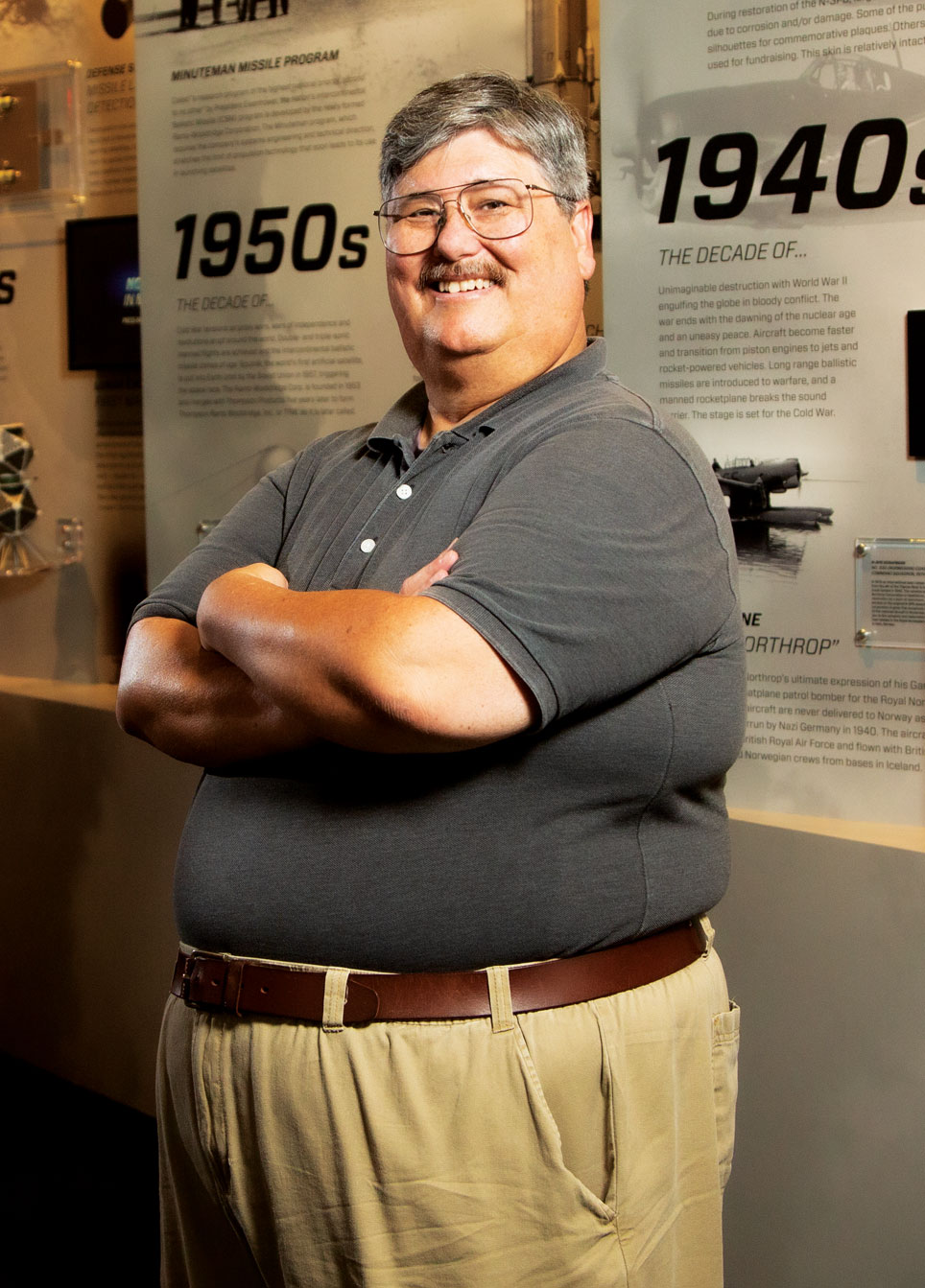
A fourth-generation Northrop Grumman employee based in Bethpage, New York, Pamela Hansen is the keeper of paper and digital historical records at the Grumman Archives. Most of what she works with is from 1929 to 1994, but she answers historical requests on anything relating to the company.
As an archivist librarian at Northrop Grumman, she helps her colleagues — often Northrop Grumman engineers, lawyers and communicators — by conducting historical research to answer their questions.
“I try to understand what people need,” Pamela said. “I'm really good at research. I like to say, ‘If we have it, I'll find it.’”
Through her role, Pamela connects engineers with history on legacy programs — such as the Apollo Lunar Module, F-14 Tomcat supersonic fighter aircraft and Vertical Take Off and Landing reports and drawings — so they understand why something was done previously, helping them create a better product. One of Pamela's favorite requests was providing lunar module images for the Apollo 50th Anniversary Dinner at the Cradle of Aviation Museum in Uniondale, New York, and contributing to Apollo 50th anniversary celebrations in the United States and Japan.
“There is value in keeping our history and in keeping it alive,” she said. “And it's alive if it's being used.”
Bringing Fresh Perspectives: Maya Bershtel, Jane Talbot and Teria Curry, Librarians
Maya Bershtel, Jane Talbot and Teria Curry manage Northrop Grumman’s virtual libraries, enabling 24/7 access to a plethora of research material, including technical, engineering and business research content, conference proceedings, eBooks, articles, journals and specifications and standards.
“Overall, we ensure that we have the right materials for the needs of our users,” Maya said, noting that each librarian focuses on a different sector of the company.
Although none of the librarians have aerospace backgrounds — Maya, Jane and Teria studied classics, anthropology and history, respectively — they’ve flourished in the company’s welcoming culture and brought fresh perspectives.
“You need a variety of people who have different experiences or ways of approaching a solution. Each of us has a different way of seeing how we're going to resolve a research request based on our experience and the tools we know,” Teria said.