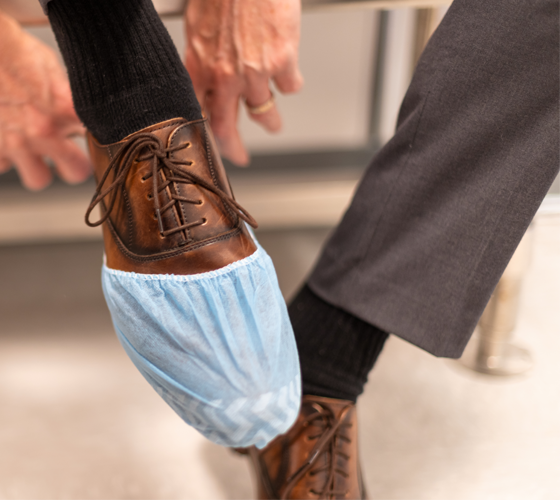
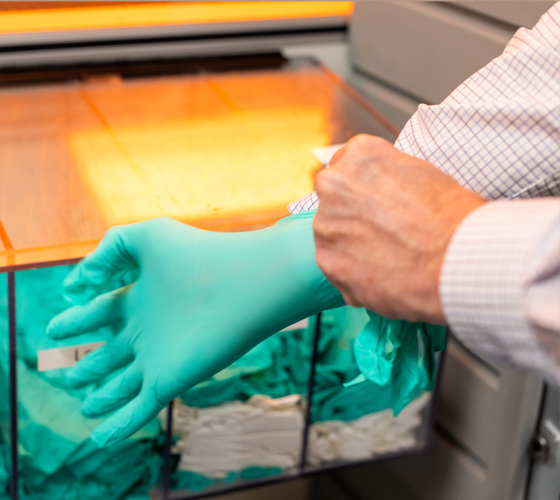
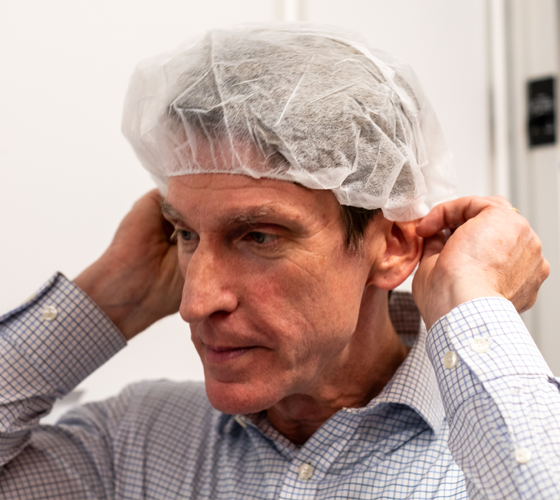
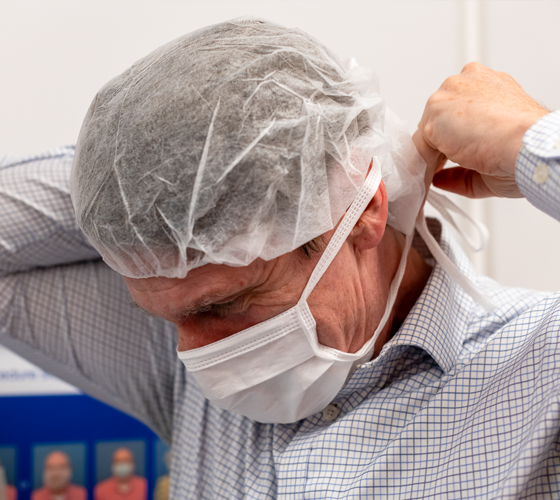
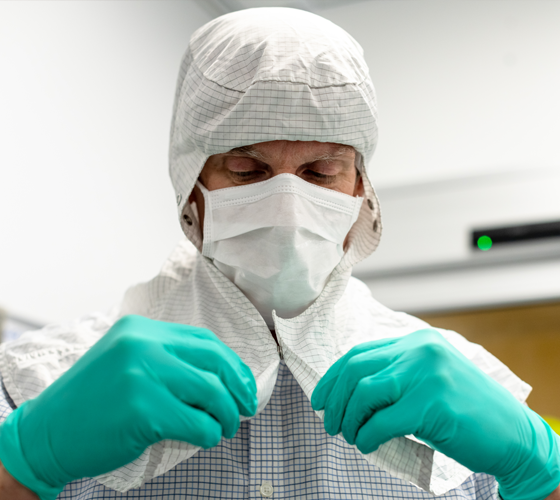
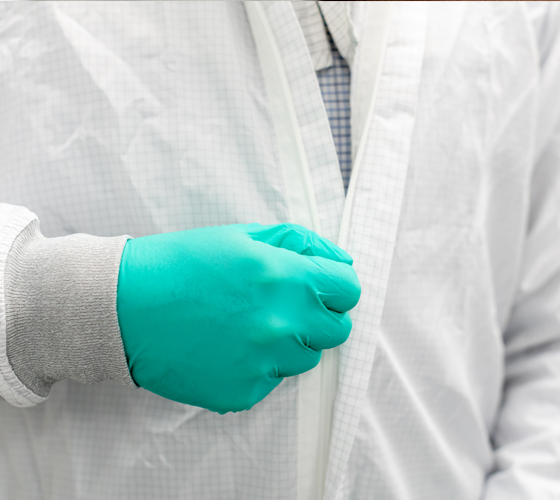
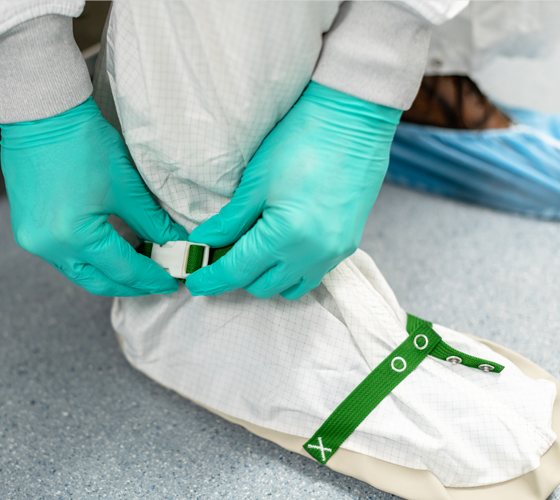
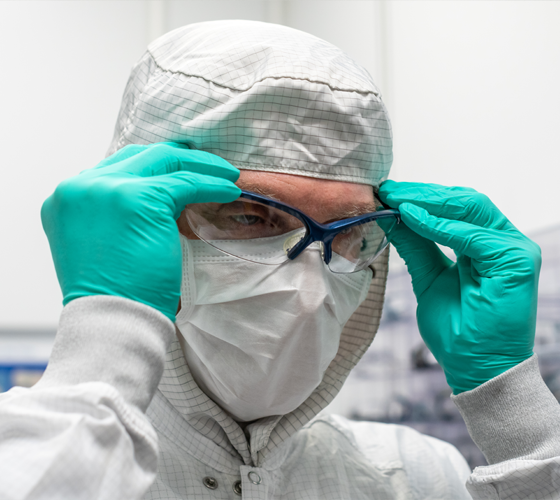
Before entering the gowning room, step on a tacky mat and cover shoes.
Get Ready With Me
Putting on the “bunny suit” for microelectronics production performance.
By Cassie Mann
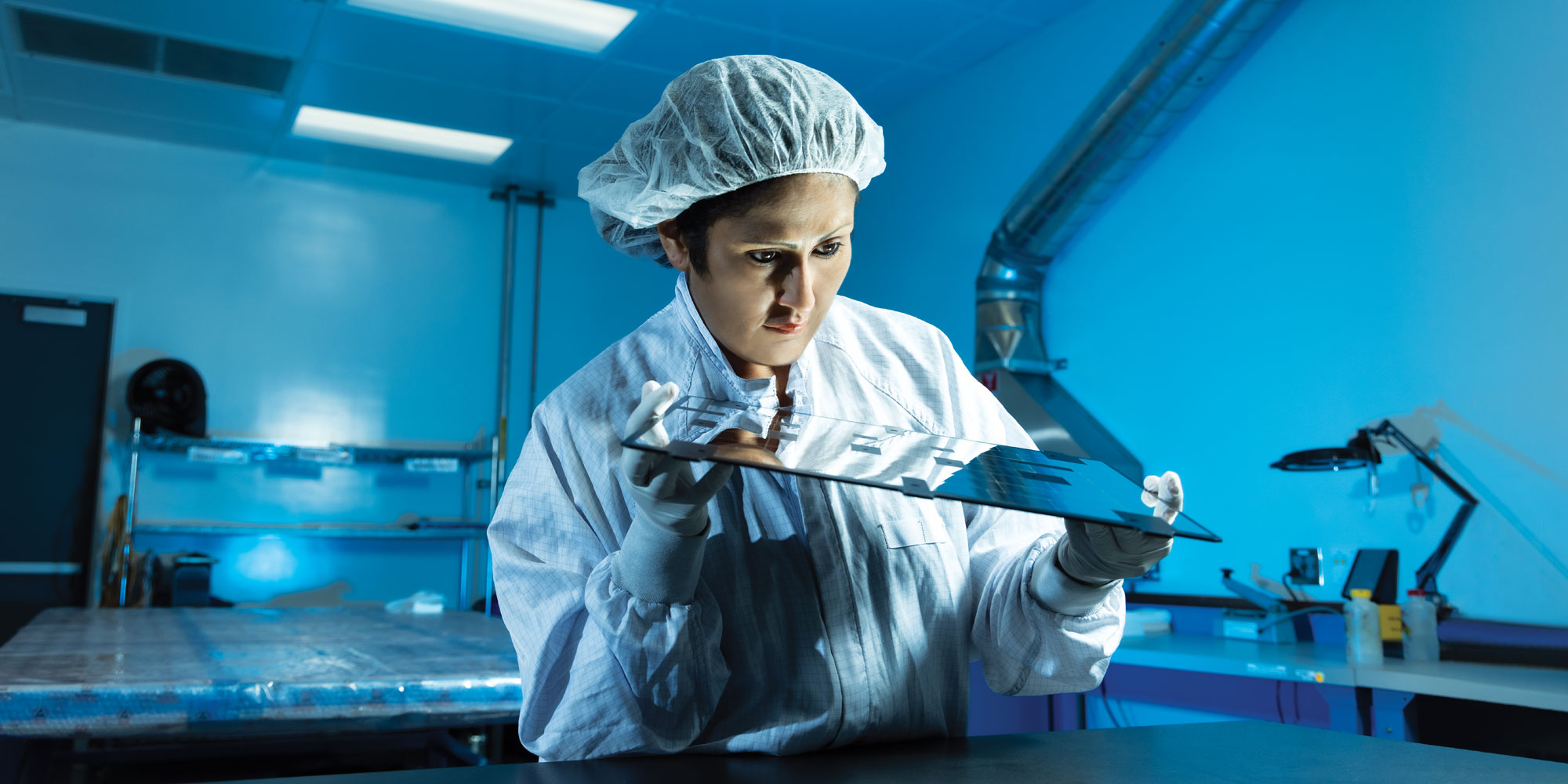
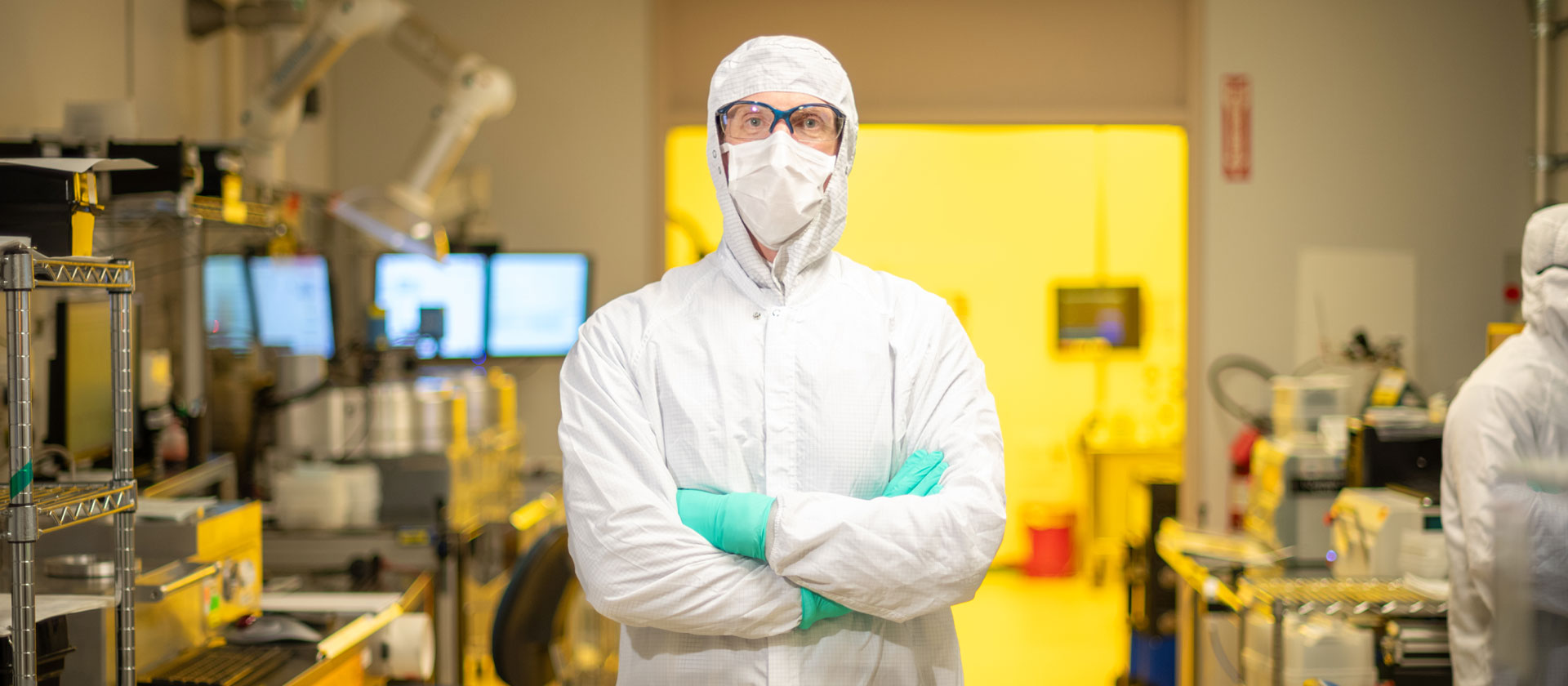
Every day, microelectronics employees don the bunny suit before they enter the cleanroom. While it may seem like a lot of work to cover yourself from head-to-toe, gowning procedures are one of the many ways we protect the product in a cleanroom.
At Northrop Grumman, many of our cleanrooms are classified as “Class 100,” meaning fewer than 100 particles, measuring 0.5 micron, per cubic foot of air. A human hair is 100 microns, so in order to protect the product, we need to clean 100 times smaller than that piece of hair. These are the same stringent standards used across the semiconductor manufacturing industry.
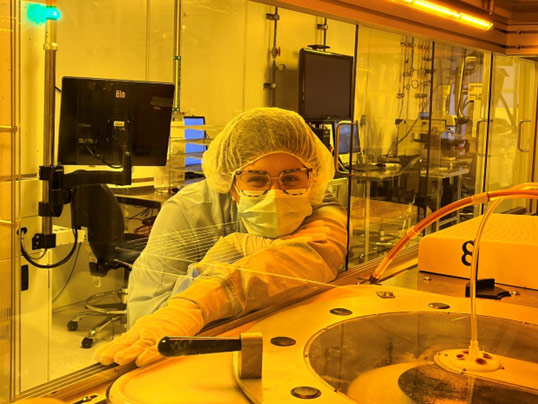
Cleanrooms maintain strong environmental controls to yield microelectronics, including keeping the area clean and debris-free through a variety of measures, such as air filtration, equipment cleaning, pressurization, and controlled entries and exits, as well as temperature and humidity control to keep the processing equipment stable. You may also notice yellow or amber lighting used to protect sensitive photoresist materials from unintended exposure to light and ensure the accuracy of the micro-patterns being created— a key requirement in both microelectronics and semiconductor device fabrication.
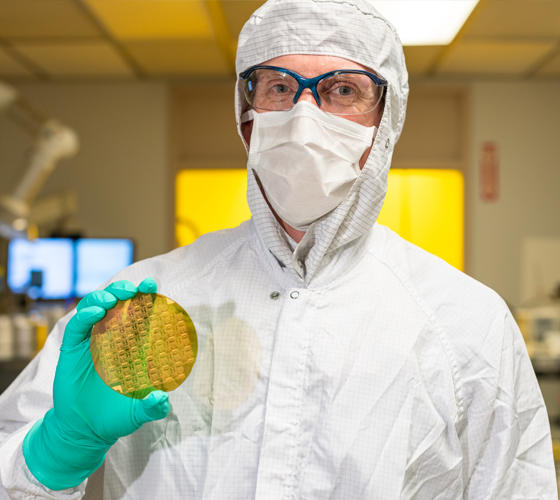
Justin Parke has been with Northrop Grumman for 17 years. While his career began as a high school physics teacher, Justin’s interest in emerging technologies led him to a role with the Northrop Grumman Microelectronics Center’s Process Integration group – the group responsible for putting together the process flows for fabricating (or, creating) wafers.