Clearing the Skies
Predicting and Preventing Contrails

The white lines etched across the sky by airplanes are a type of airplane emission known as contrails and a team at Northrop Grumman is studying how to predict and prevent them — offering a new approach to reducing aviation’s impact on our skies.
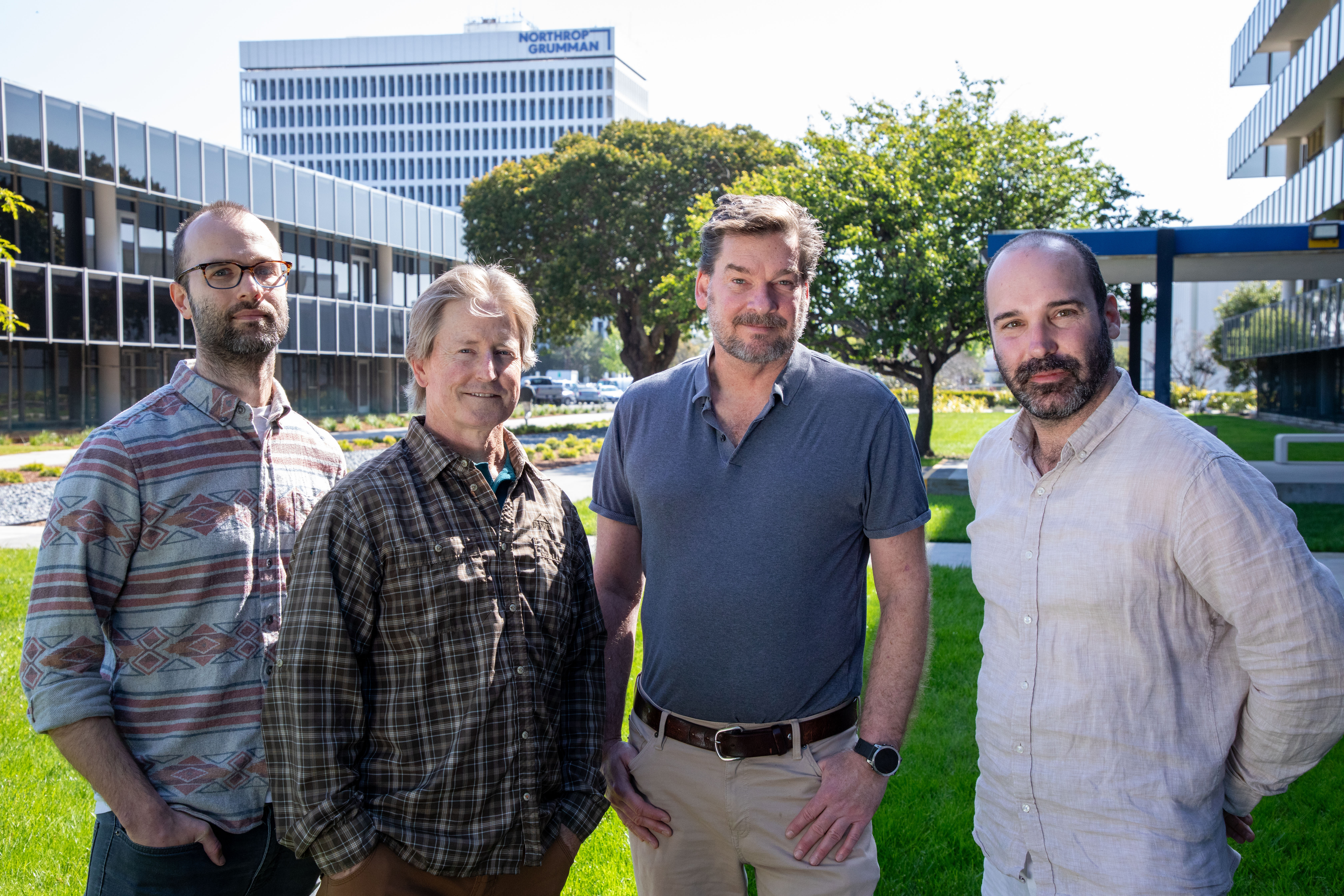
If we can find a way to predict the conditions, then pilots can avoid creating them,” said Bill Deal, a Northrop Grumman engineering fellow who is on the team working with NASA’s Jet Propulsion Laboratory. “No one has tried to implement our unique approach.”
Condensation trails, or contrails, are created by an aircraft’s exhaust and can trap energy in the Earth's atmosphere.
Scientists have understood how to predict contrail formation since the 1940s. However, persistent contrails — which create cloud lines across the sky — are not as easy to predict.
Loading component...
Loading component...
Predicting the Conditions
In 2023, the Advanced Research Projects Agency–Energy (ARPA-E) — a government agency focused on transformational science and technology research and development — launched Predictive Real-time Emissions Technologies Reducing Aircraft Induced Lines in the Sky (PRE-TRAILS), which included five projects each aimed at tackling an aspect of contrails.
Bill leads the Contrail Avoidance Systems (CAS) project at Northrop Grumman which is using unique technology to eliminate contrails altogether as part of ARPA-E’s PRE-TRAILS study.
“CAS is promoting the creation of new instruments and predictive models for pilots and air traffic controllers that will ultimately help them avoid persistent contrail producing areas,” Bill said.
“This is the first time anyone has tried this,” said Aaron Swanson, a Northrop Grumman mission engineer. The team is using a combined method that includes the application of a sensor that measures water vapor and temperature around an aircraft as well as real-time data processing and modeling to provide an end-to-end system for contrail formation prediction. Current methods focus on avoidance and depend on past observations of contrails in heavily trafficked flight paths.
If successful, the predictive models and new flight instrumentation the team is developing would give pilots and air traffic controllers information to create contrail-free flight paths anywhere on the globe and, in the future, produce real-time predictions onboard an aircraft to avoid persistent contrail formation.
“It will take years or decades to see the effects of some emissions efforts, but eliminating persistent contrails from our skies is low hanging fruit. The positive effect would be immediate,” Bill said.
The study’s instruments and algorithms will take flight early next year, with results expected to be published in 2027.
Learn more about Northrop Grumman’s sustainability goals, commitments and achievements.