HOP Queue (Hyperspectral Onboard Processing Queue)

Coastal Water and Forest Conservation
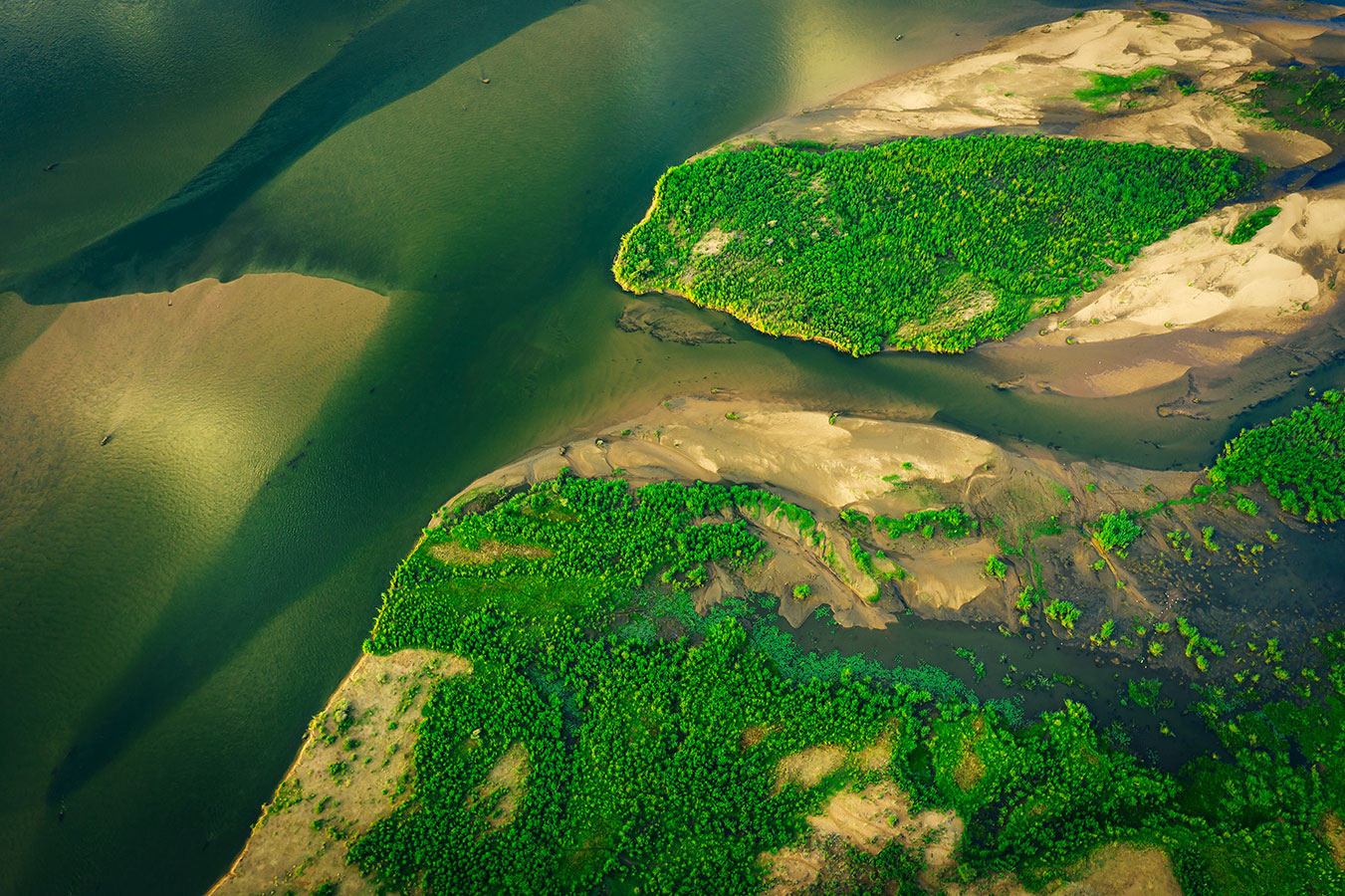
Assessing the health of coastal waters and forests can be an overwhelming task for conservationists. Coasts and watersheds often stretch for miles, and the sediment and agricultural runoff that often causes environmental damage to these ecosystems can be hard to detect. Dense, healthy forests are critical to local water quality - absorbing sediment and runoff, filtering pollution, and preventing erosion – but can be just as vulnerable to degradation, especially in extreme conditions such as an unexpected and catastrophic wildfires. The large-scale monitoring of both coastal and forest health is key not only to maintaining healthy ecosystems, but to protecting the quality of water on which humans also rely.
To help track the quality of coastal waters and forests, Northrop Grumman is collaborating with the NASA Jet Propulsion Laboratory’s Surface Biology and Geology study on the HOP Queue Tech for Conservation project. We’ll work together by using an HSI-dependent system to detect nutrient and solution runoff, microplastics, and algae growth and O2 hypoxia for coastal waters and forest fires, burn areas, fuel levels, and biodiversity of forested areas. We’ll compare water quality metrics and forest health metrics to truth data to scale the system up from ground testing to flight demonstrations as a surrogate for a CubeSat payload to provide monitoring services worldwide. NASA scientists will be able to utilize this data for environmental monitoring such as predicting algal blooms, which result from excess nutrients in waterways.
Loading component...
Loading component...
Are you interested in technology and innovation?
We are, too. Check out Northrop Grumman career opportunities and consider joining our team.