


From a young age, Lucas Kadar was drawn to aerospace.
Fast-Tracking Concept to Combat
The Power of Northrop Grumman’s Customizable Test Fleet
By Caitlyn OFlaherty
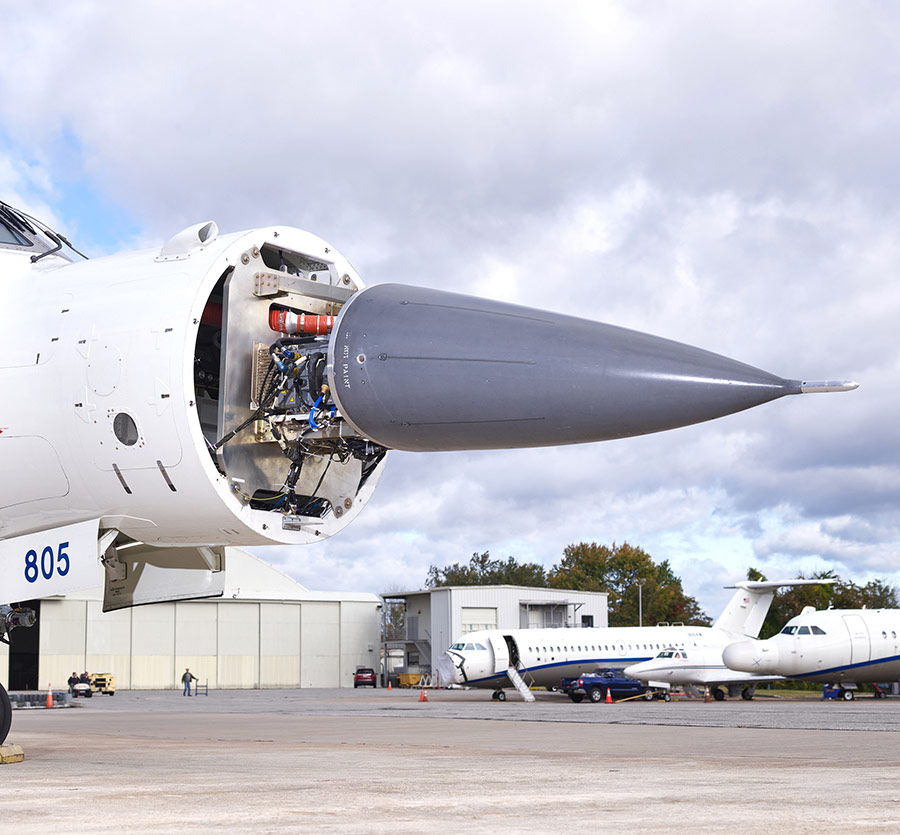
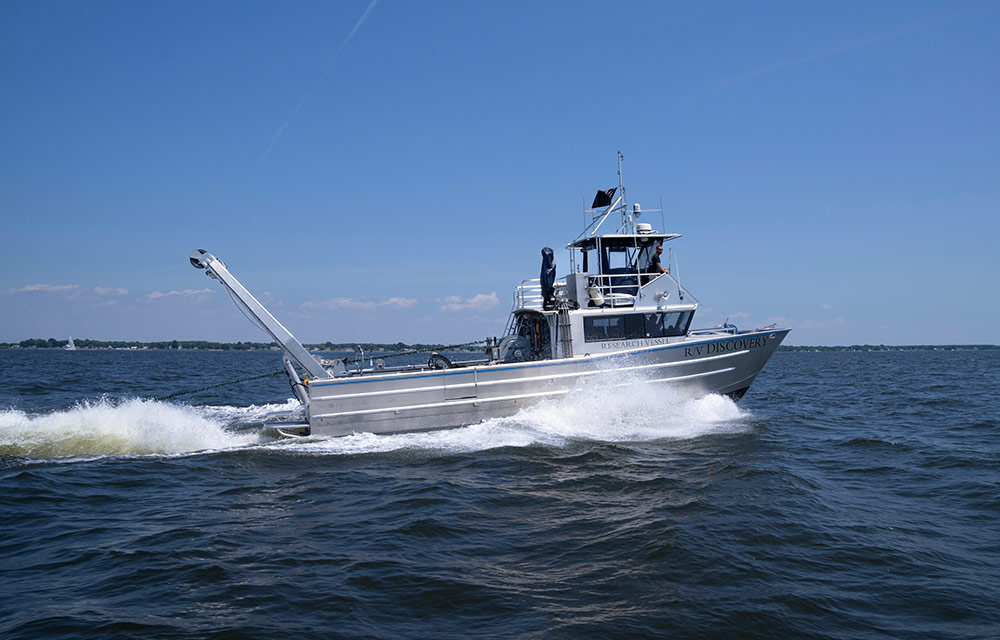
In the hangar on Northrop Grumman’s Baltimore, Maryland, campus sit three Bombardier CRJ-700s that look more like transformers than the regional airliners they once were. Known as “flying laboratories,” these commercial jets have been gutted and reconfigured to be testbeds for company technologies. And the testing fleet isn’t limited to the skies; Northrop Grumman owns and operates four on-water test vessels in the Chesapeake Bay as well.
“The ability to test, innovate, reconfigure and retest under one roof is game-changing. It enables our program engineers to refine hardware and software in real-world environments in substantially less time,” said Greg Ellison, director, test pilot engineering.
Loading component...
Loading component...
Loading component...
Loading component...
Loading component...
Loading component...
Innovating at Speed
Across the industry, waiting for an available testbed is a major hurdle in getting technologies to market. According to customers, our testing program reduces their projected timeline for technology innovation and production by about two-thirds. A prime example of this efficiency is a radar system we developed, which attaches to the bottom of an aircraft and can detect the presence of improvised explosive devices. Through our in-house development, testing, and iteration, we managed to reduce a typically 10-year-long process to just four years. “That’s six more years of safeguarding service members in the field with cutting edge technology,” Paul said.
Learn more about life as a Northrop Grumman Test Pilot.