Hardening the Future
Exploring New Ways to Harden Microelectronics for the Harshest Environments

By Nestor Vences Gonzalez
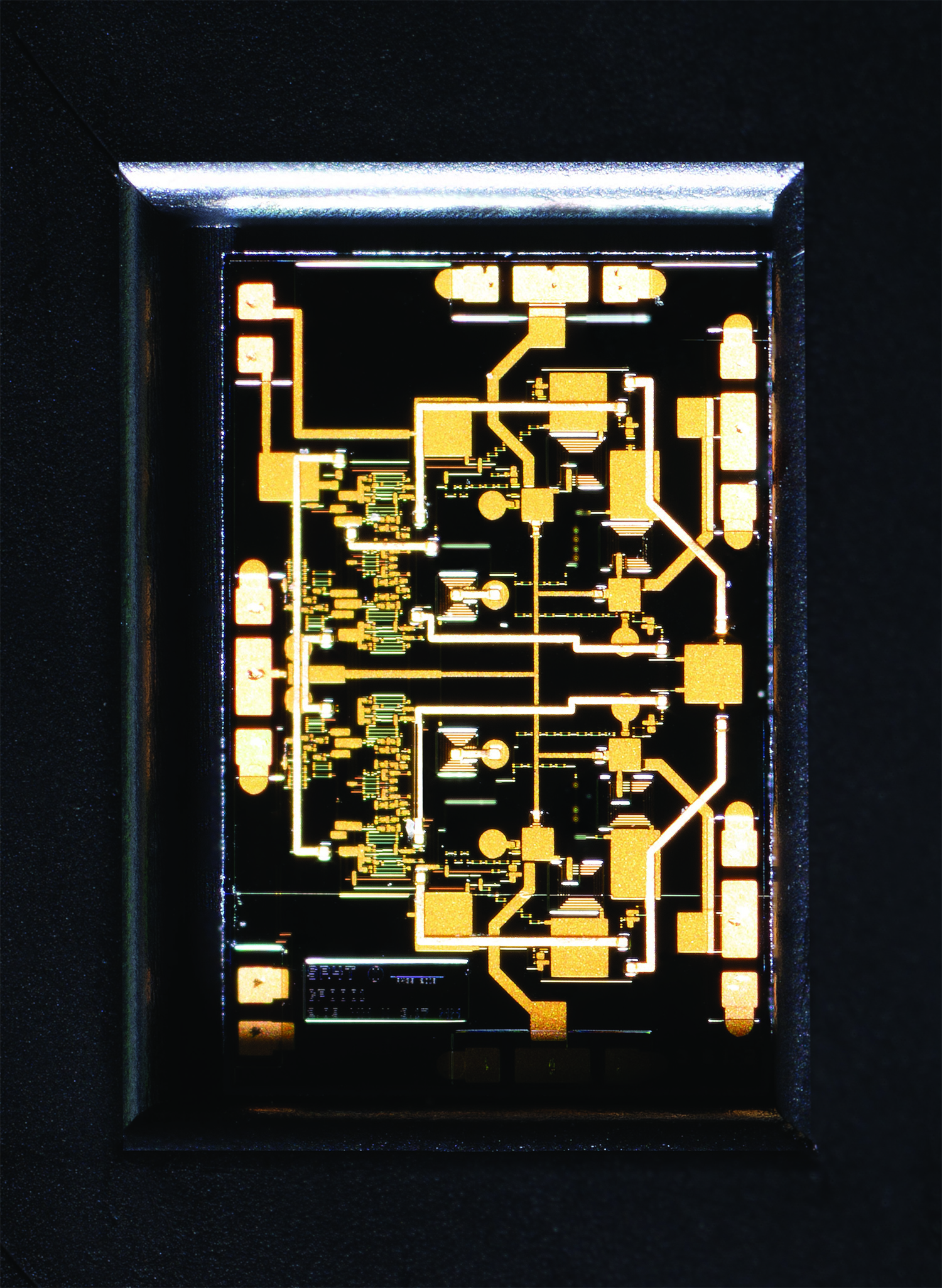
In space, radiation is one of the greatest threats to a spacecraft’s microelectronics components, wreaking havoc on the delicate, tiny parts that power the spacecraft. Now, a Northrop Grumman team is testing methods that could revolutionize how future spacecraft semiconductors are protected — or hardened — against radiation.
“We can increase the radiation tolerance of semiconductors — the electricity channels in chips — by changing the fabrication process or by designing the chips to anticipate radiation, thus lowering cost and increasing capabilities,” said Dan Benveniste, a Northrop Grumman engineering strategist leading the team researching solutions for this problem.
This research could enable on-orbit microelectronics to better keep pace with innovations of those on the ground. As microelectronics advance, the extra hurdle of incorporating radiation hardening into the latest designs can take years, causing a technological lag between commercial chips on Earth and those on spacecraft.
“Microelectronics created for our cellphone, cars and computers wouldn’t last outside of Earth’s atmosphere,” said Mike Wojtowicz, a Northrop Grumman fellow. “Coupled with significant testing, we can ensure that our critical technology is shielded from the harsh space environment while maintaining optimal functionality.”