By Matt McKinney
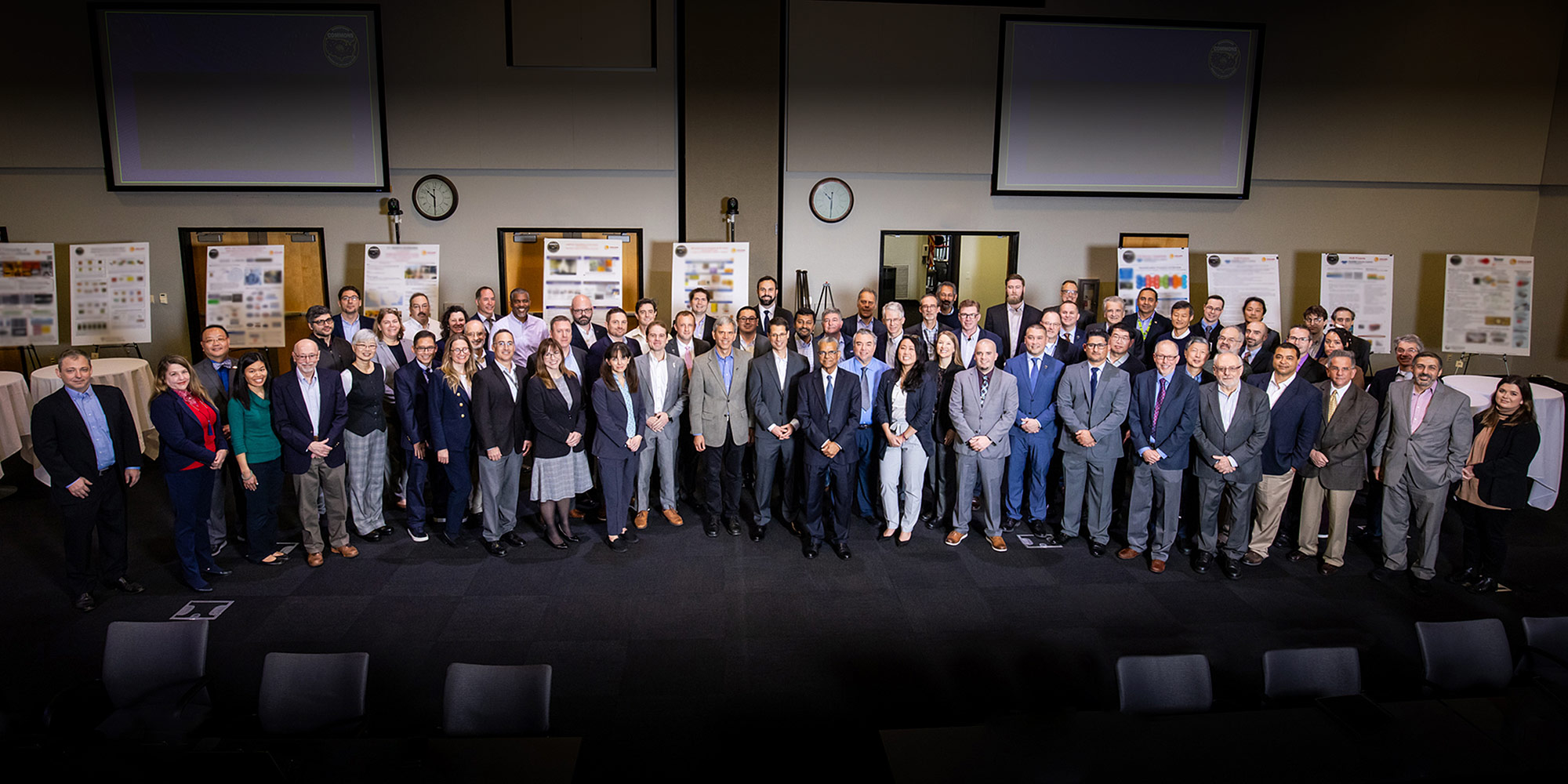
REDONDO BEACH (Feb. 19, 2024) – Marking their first official site visit, a select group of government, industry, and academic leaders recently gathered at Northrop Grumman’s Space Park campus to discuss their role in a landmark effort to expand research, development, and production of essential advanced microelectronics technologies in the United States.
“We are here because we are in the business of diversifying the microelectronics manufacturing industry,” said Dr. Dev Shenoy, who leads the U.S. Defense Department’s research and engineering efforts in microelectronics.
The full-day conference brought together leaders of the California Defense Ready Electronics and Microdevices Superhub (California DREAMS), one of eight such regional innovation hubs across the U.S. In total, the centers have already been awarded nearly $240 million in federal funding from the U.S. CHIPS and Science Act.
Loading component...
Loading component...
Developing Skilled Workers
In a presentation focused on workforce development, Dr. Andrea Belz, California DREAMS director of translational strategy and vice dean at the USC Viterbi School of Engineering, described the microchip-production skills gap and plans to address it.
Although the semiconductor industry is projected to add nearly 115,000 jobs by the end of the decade, 58% of them risk going unfilled due to workforce skill gaps, according to a recent report by the Semiconductor Industry Association. Many such jobs may not require traditional university degrees, according to presenters at the Jan. 22 event.
Bolstering the talent pool presents numerous challenges, including competition from the computer science sector and the large number of graduate students – including more than 70% of Ph.D. students – ineligible to receive security clearances due to their status as non-U.S. citizens, Belz said.
Belz said California DREAMS and its partners aim to double the number of clearable personnel entering fields related to electronics by bolstering regional training, promoting job postings, and more.
“We intend to develop solutions that can be used across the country and can be deployed in all the other hubs,” Belz said.