Niobium is a transition metal first identified in 1801 by English chemist Charles Hatchett. Originally called columbium, it shares many physical properties with another element called tantalum, which is directly below niobium in the periodic table. In fact, the two elements were thought to be the same until their valence states were identified and eventually columbium was renamed niobium — for the mythological Niobe, daughter of Tantalus — to show their close relationship.
Windgassen, an electrical engineer, had been considering the UUV charging problem and was considering a somewhat different solution when he came to see his friend, Harvey Hack, a renowned metallurgist who had previously used niobium metal for its extreme corrosion resistance in a different connector design. Hack’s mention of niobium reminded Windgassen of how tantalum capacitors, a common type of electronic component work, and that the same physics the tantalum capacitor uses to function could possibly be leveraged towards making a new type of underwater electrical connector. The two collaborated on a niobium-based connector for UUV battery recharging but quickly realized its potential to solve both sides of the power-meets-water problem: corrosion and contact.
The game-changing characteristic? A passive film. "Although that film is only a couple of molecules thick, the film prevents any current from leaving the contact and going into the water," says Hack. "Even with applied voltages that would destroy traditional contact materials."
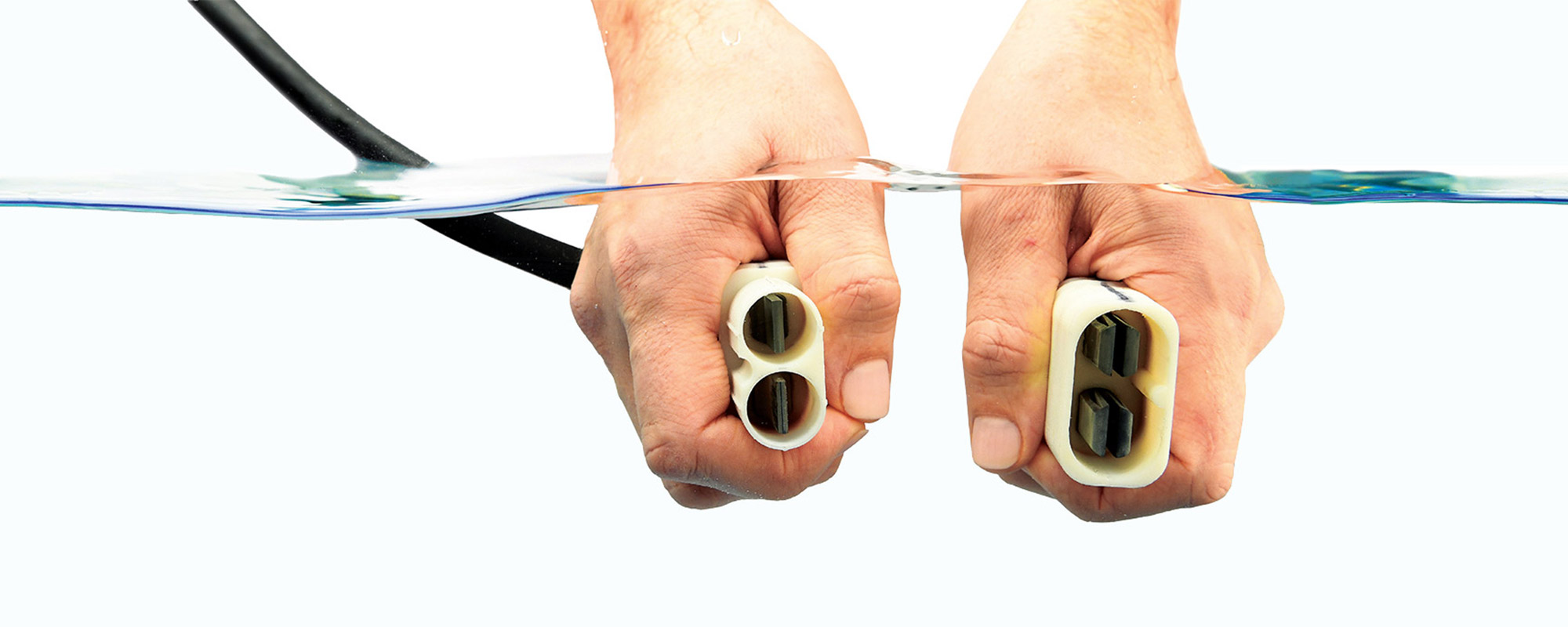
When submerged in water, niobium "grows" a 150 nanometer-thick insulation layer that both prevents electricity from escaping into the water and also keeps the connector contacts corrosion-free. When mated, metal connector contacts locally disrupt this film by scraping against each other to create a secure electrical link. Upon de-mating, exposure to water causes the film to re-form in milliseconds, making NiobiCon™ connectors safe to use for any wet-environment application.