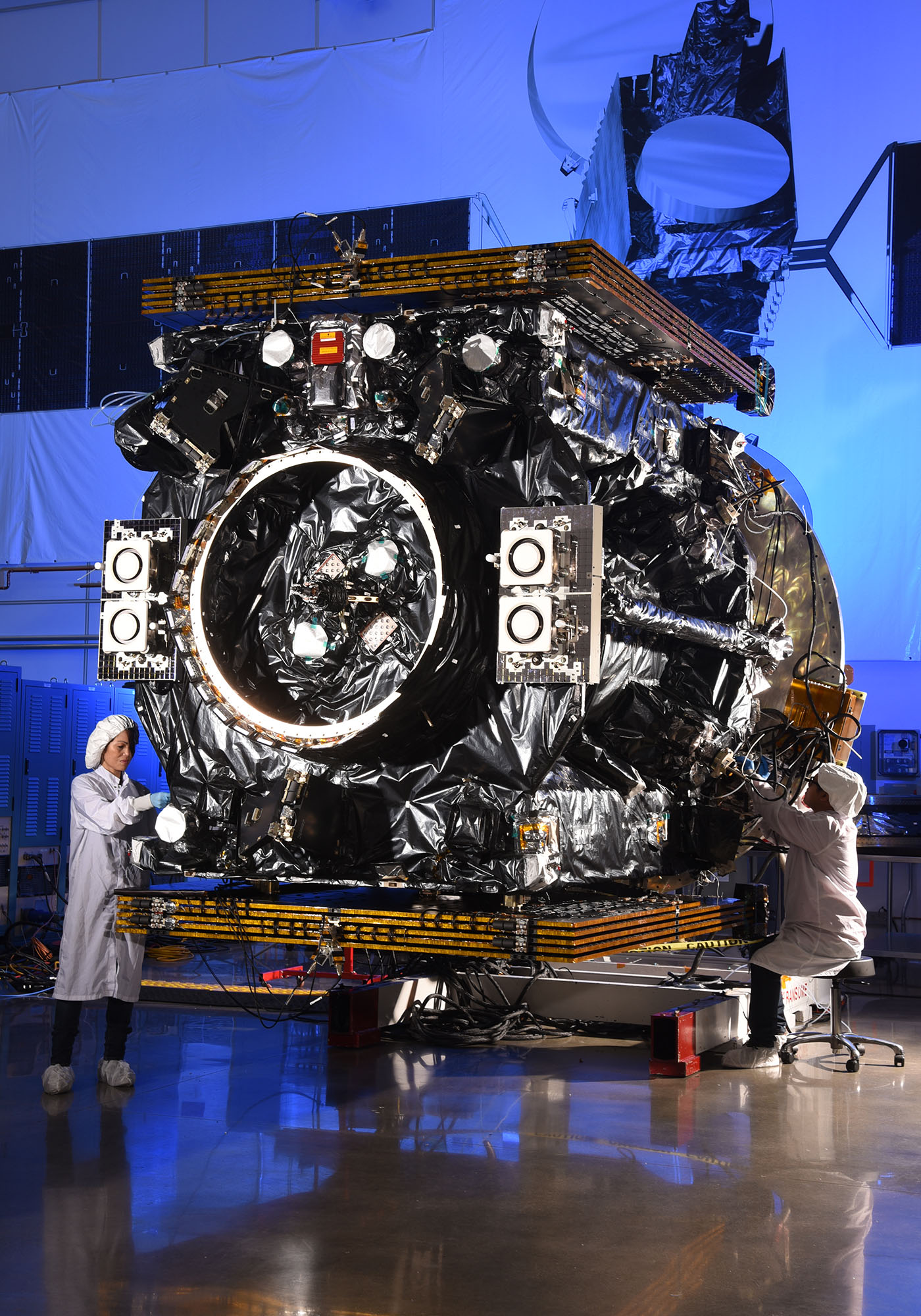
The Balancing Act of Integration
With scope and scale established, spacecraft systems engineers can go to work. But Ciffone noted that this process is all about balance of managing cost and complexity while delivering on both form and function. Here, a phased approach helps ensure progress and allows ease of integration across iterative design.
Architectural Assemblies: Before companies issue a request for proposal (RFP), they communicate basic requirements with spacecraft designers, allowing system engineers to lay out each satellite segment’s physical pieces. This phase ensures requested system frameworks are functionally possible. Shaw also noted that it's critical to loop in space vehicle integration and test (I&T) experts during this phase because "you don't want them to walk in, see all the parts on the floor and tell you that your satellite can't be built the way you've designed it."
Systems Studies: This focuses on evaluating different technical approaches to create a risk-and-reward analysis of each solution and determine the best way forward.
Achievable Adjustments: The goal of any satellite design is to remain "power positive" in orbit — this requires listing out all required components, totaling up their mass and power consumption requirements and comparing them to projected power generation capacity.
Change Considerations: To effectively manage change across the scope of complex satellite design, Northrop Grumman uses an Engineering Review Board (ERB) to track proposed modifications. This allows each team to describe how changes may affect both specific mission systems and the spacecraft at scale.
RFP Reviews: In many cases, the time between initial customer inquiry and official RFP is significant. This poses a potential problem, according to Greg Davidson, director of Capture and Proposal Excellence, since "what the customer asked for 10 months or a year ago may not be precisely what they want now that you're on contract." As a result, it's critical to conduct a system requirements review (SRR), preliminary design review (PDR) and critical design review (CDR) to ensure engineering efforts and customer expectations match.