Creating Zero G on a Planet Weighed Down by Gravity
By Albert McKeon
It might seem like a tall order to conduct zero-gravity (G) testing on space technology here on Earth — where there's a lot of gravity.
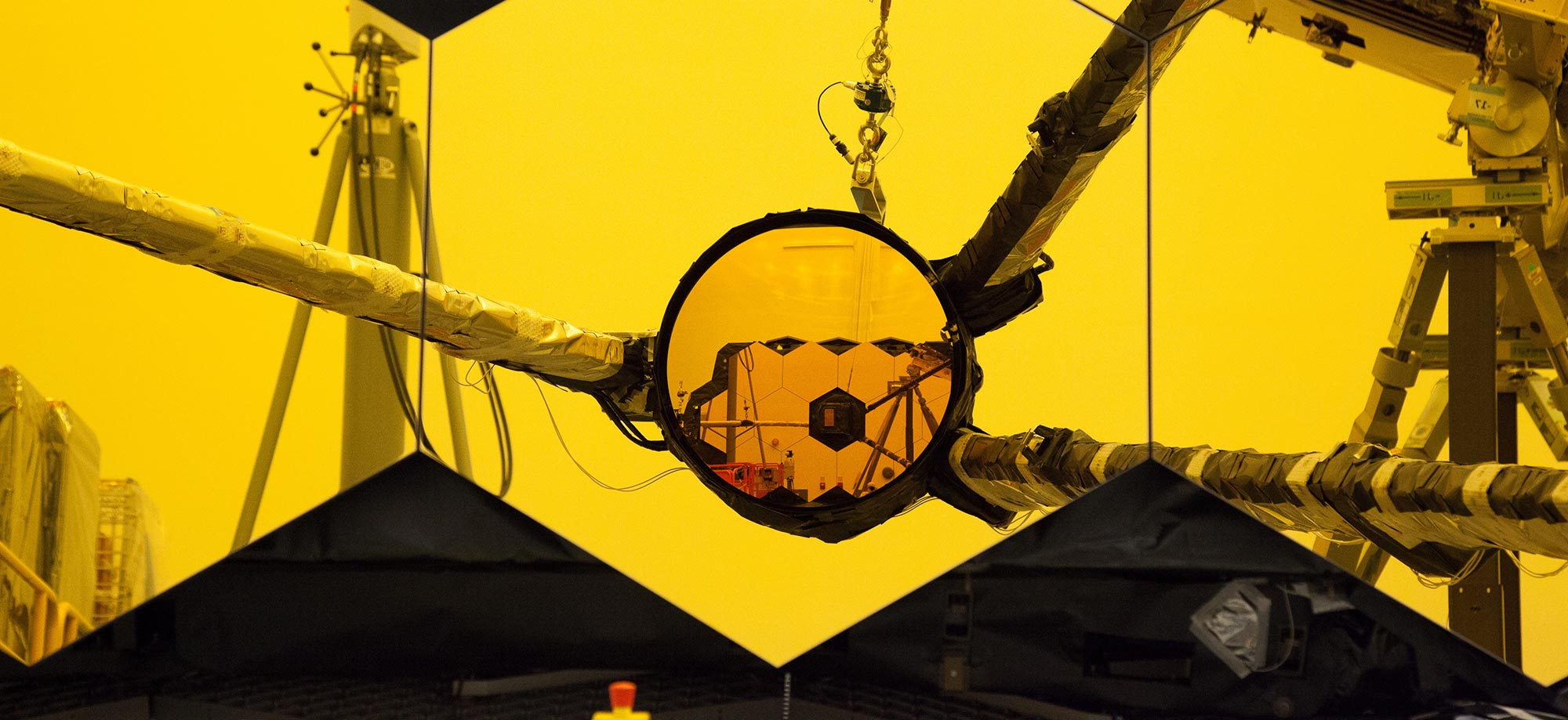
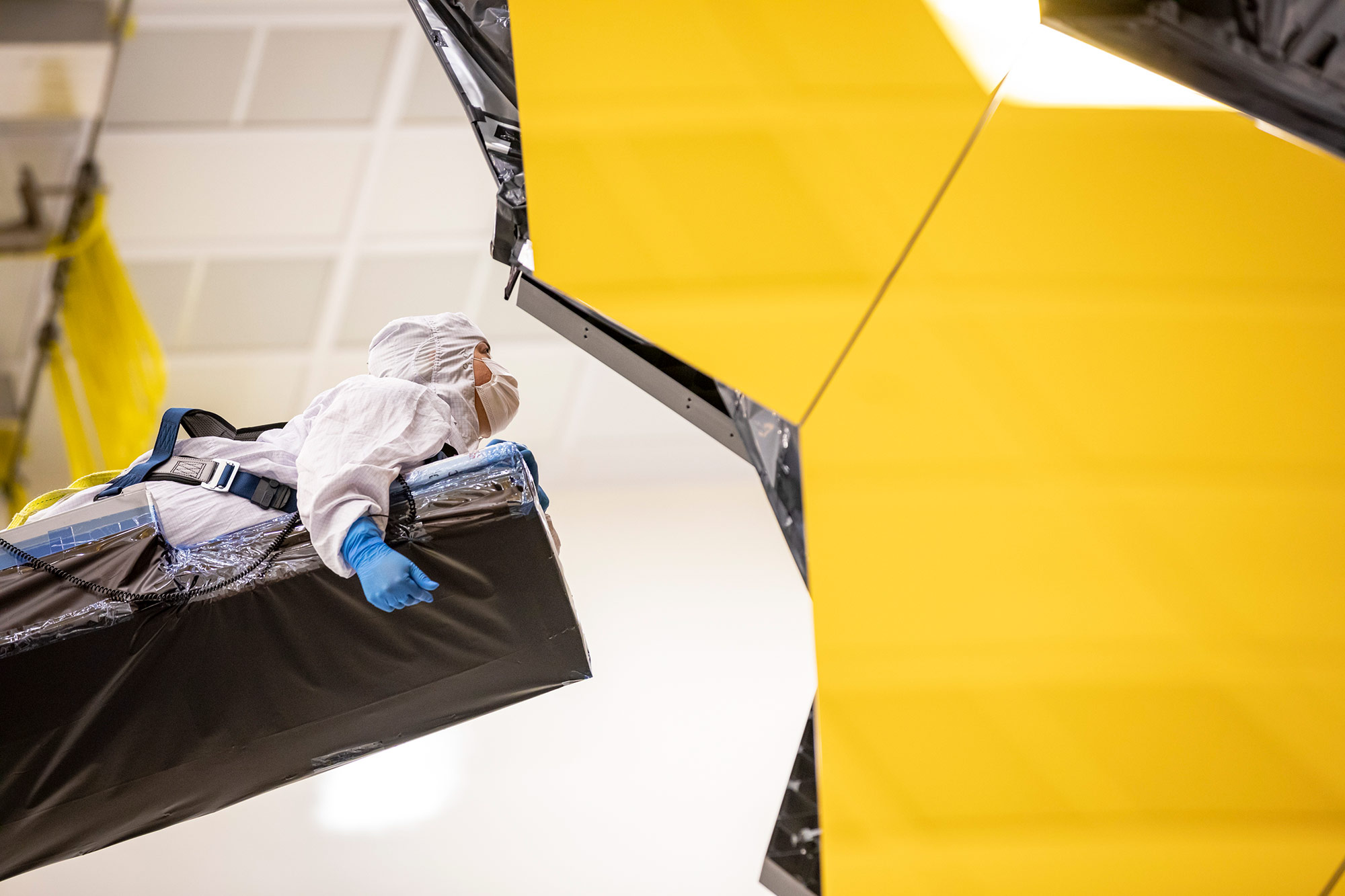
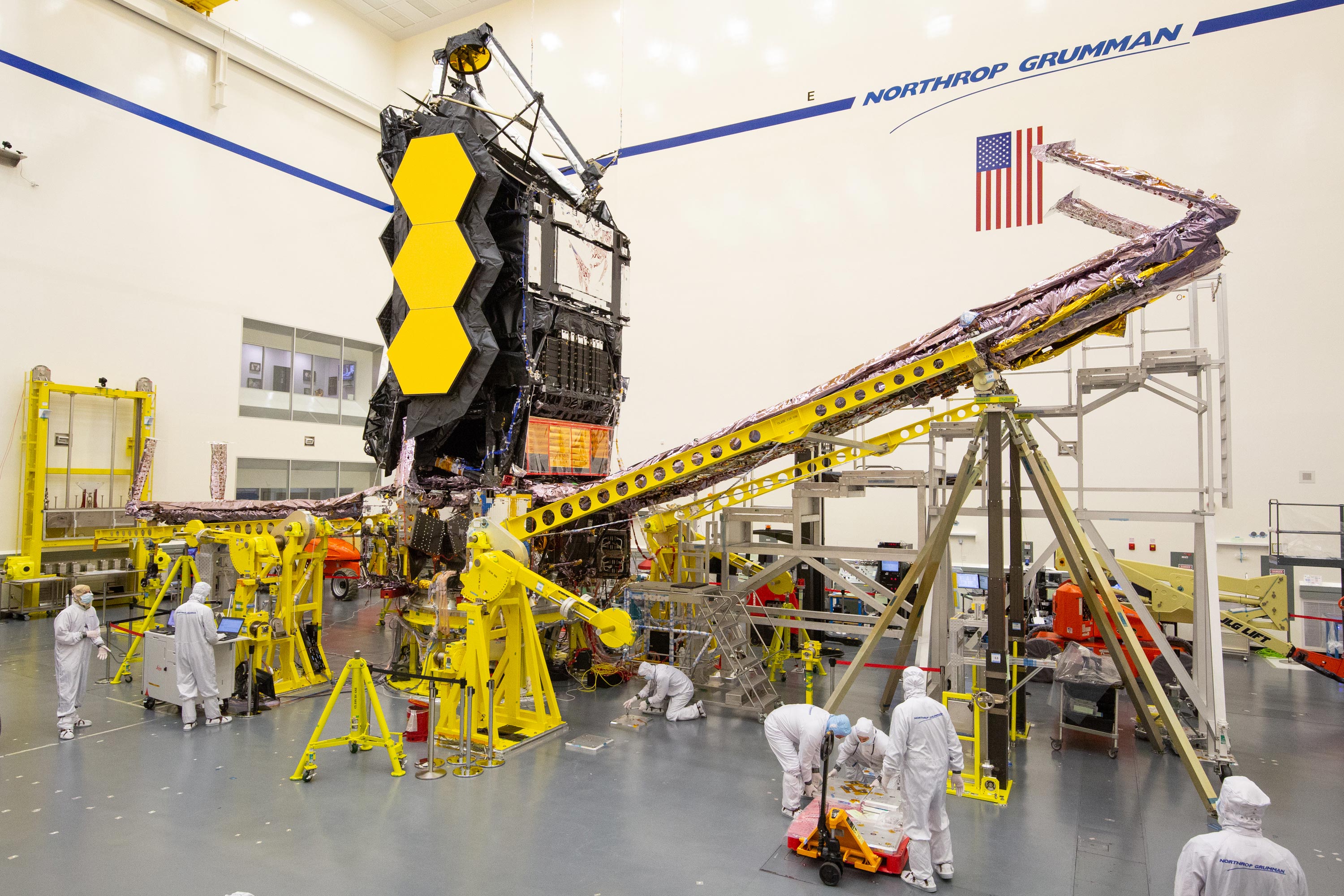
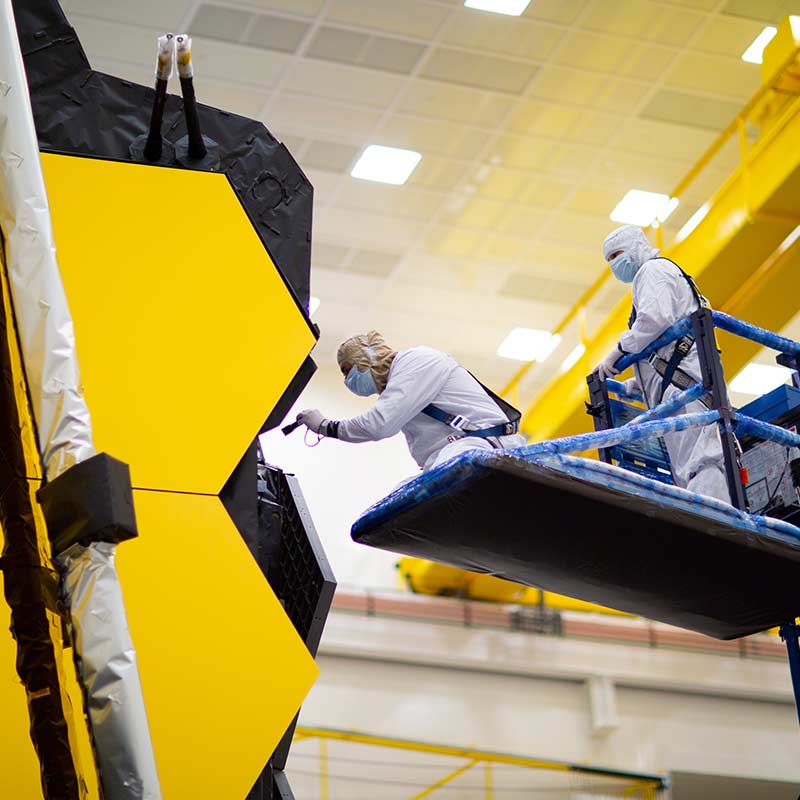
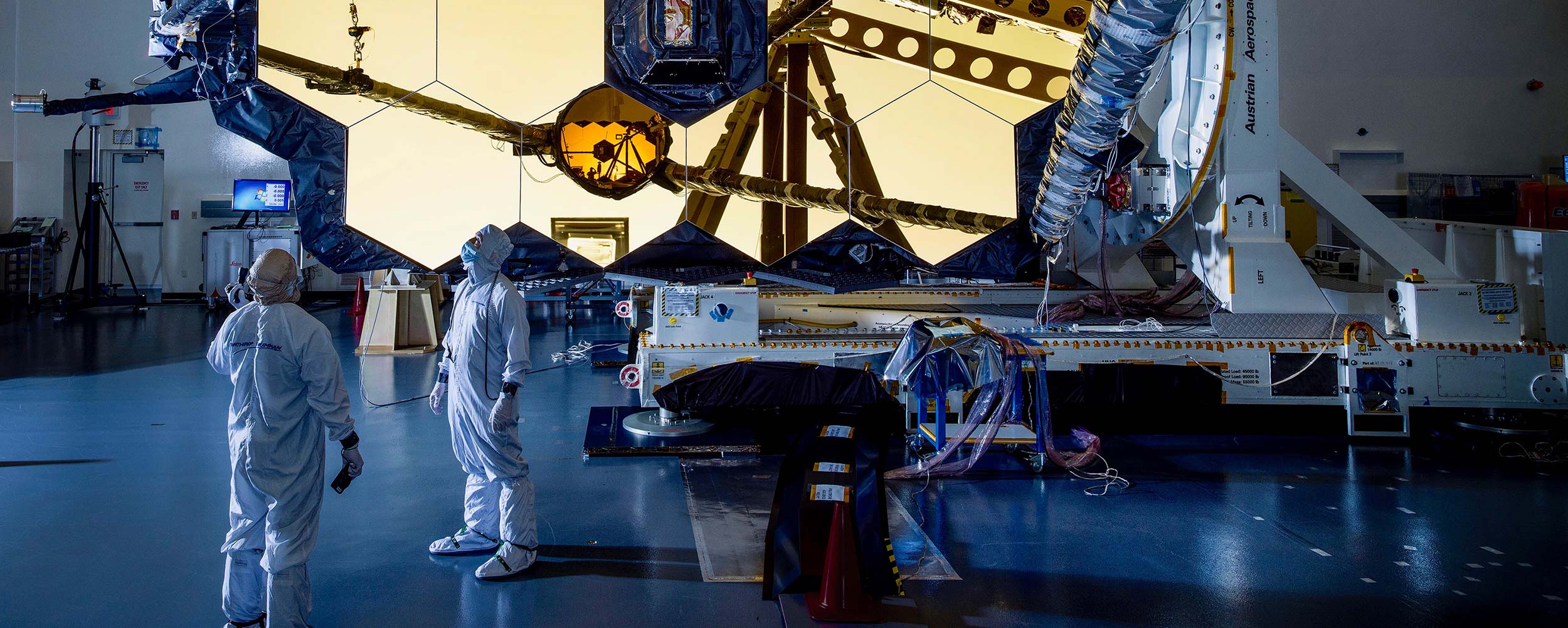
But using weights, pulleys and other forms of ground support equipment (not to mention a deep understanding of physics), Northrop Grumman engineers can mimic, as much as possible, the weightlessness of zero G. Their ability to unburden flight hardware from the bonds of gravity during Earthbound testing approximates the conditions that specialized equipment will encounter in weightless space.
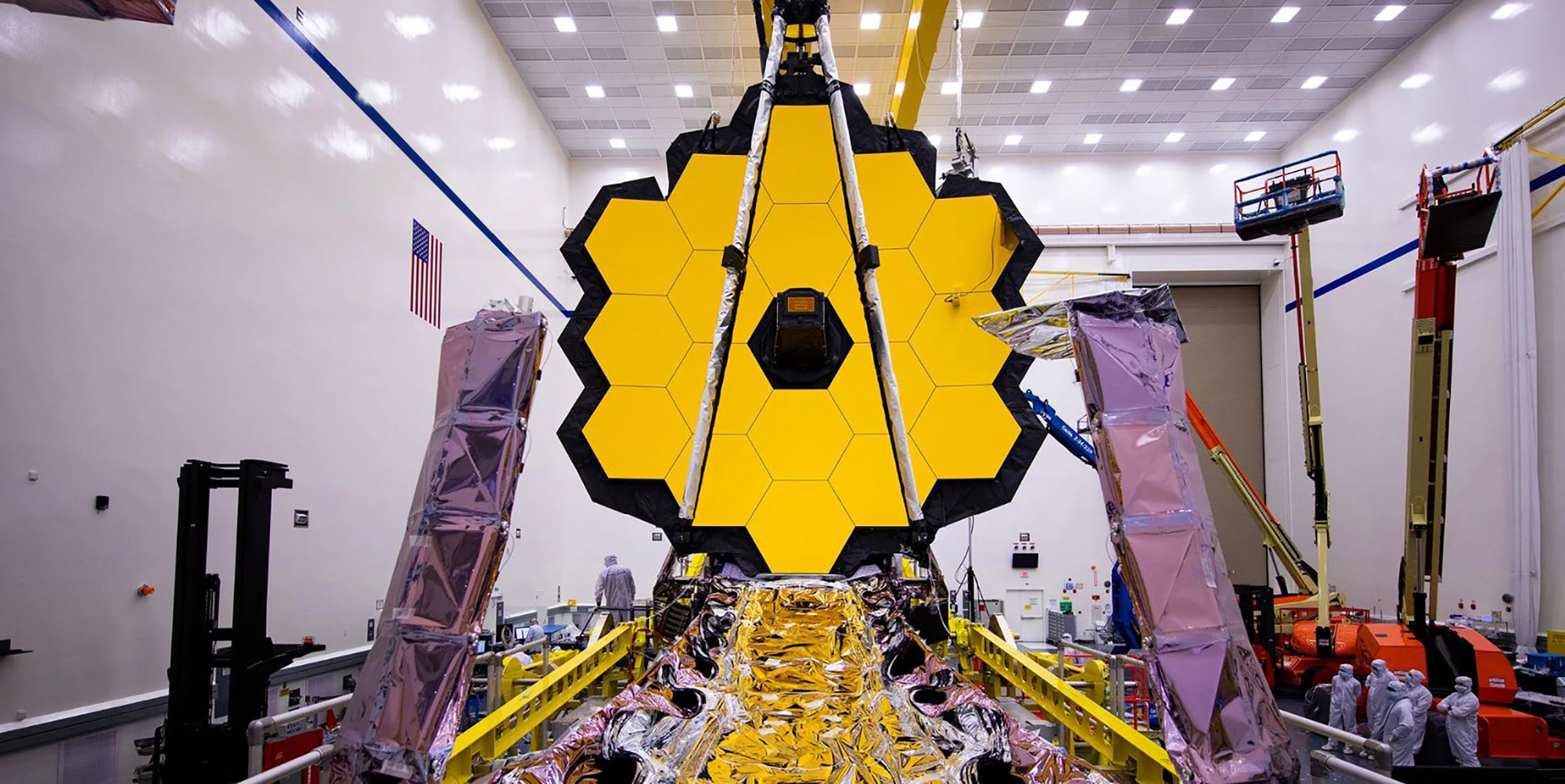
All kinds of space technologies are analyzed by these mechanical engineers, but no project has perhaps tested their knowledge and fortitude more than NASA’s James Webb Space Telescope. Webb is a marvel of engineering itself and has unique characteristics and components that prompted the mechanical engineers to rely on a playbook that wouldn't necessarily be followed in the development of other spacecraft.
But this challenge was embraced by the engineers. They found Webb invigorating and perhaps unsurpassable, even in a profession that presents its fair share of remarkable work. Having a hand in the creation of space technology is always rewarding — preparing Webb for its historic mission to study the universe will go down as a dream assignment.
"I've worked on a handful of programs, and this is a once-in-a-lifetime opportunity," said Jonathan Chang, a Mechanical AI&T (Assembly, Integration & Test) manager at Northrop Grumman who worked on Webb for more than a dozen years before recently shifting to other projects. "It's a huge undertaking. I'm proud of my team and will now be watching as it prepares for launch."
Loading component...
Loading component...
Loading component...
Loading component...