Chemistry Services
Performing investigative testing and analytical services
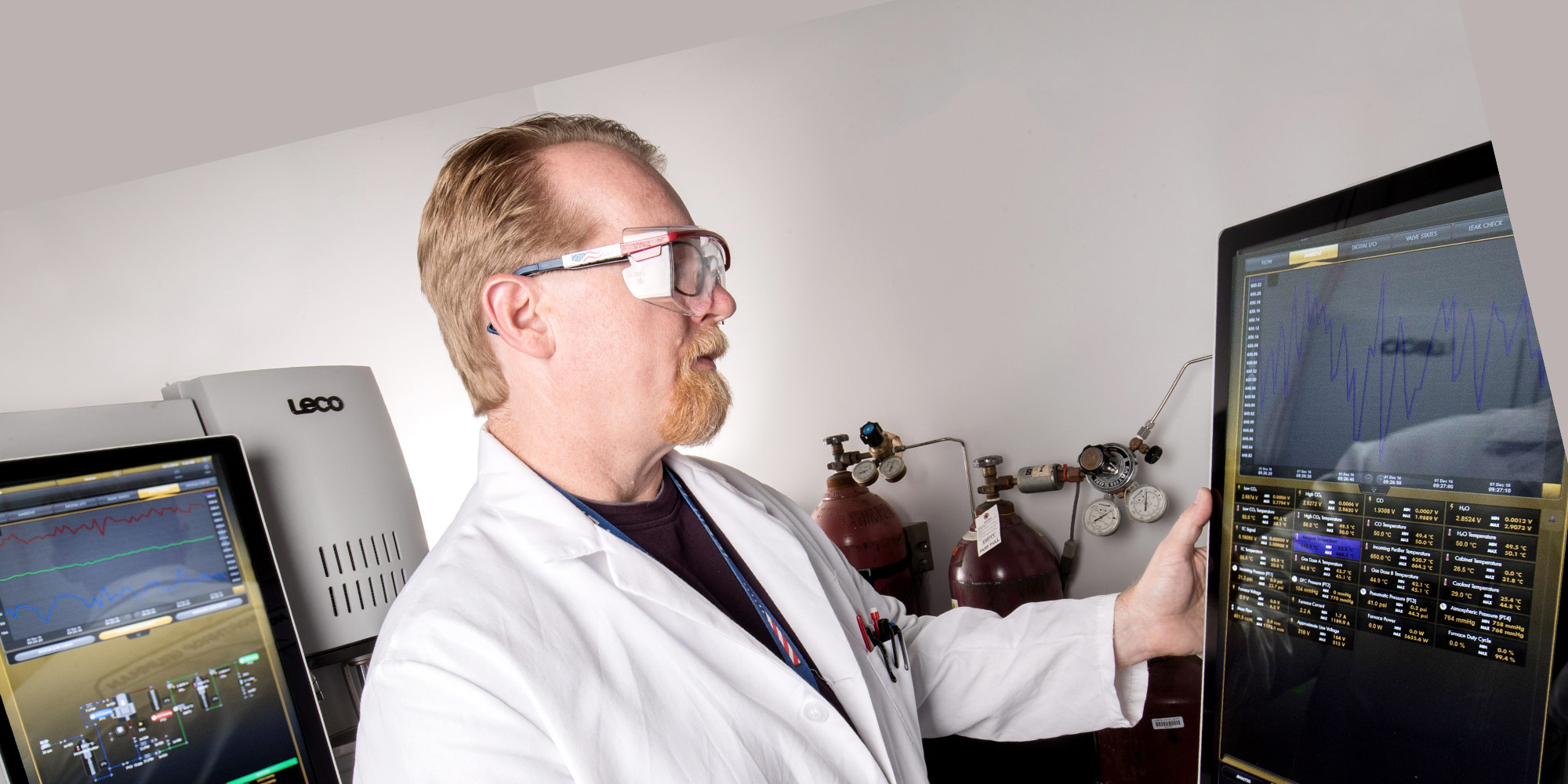
Our Chemistry Services laboratories are equipped with state of the art instruments and staffed by leaders in the fields of chemistry, engineering and science.
Loading component...
Loading component...
Loading component...
Loading component...
Becoming a Customer
Aerospace Services makes it easy to do business with the individual service units, using efficient quoting, contracting, and invoicing processes. Aerospace Services has provided high quality service to many satisfied customers and is committed to delivering a positive customer experience. To get started, contact a specialist to request information on Testing and Engineering services or request a quotation if you already know what you need. Also see the FAQs for more information.
 Instrument Range (1 g sample)
 Sample Type:
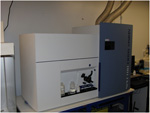 Uses inductively coupled plasma to generate excited atoms which emit element-specific radiation. This radiation is diffracted into its spectral components in the optical system. A diode array of semiconductor detectors (CCDs) provides simultaneous measurement of emission intensities, which are in turn converted into element concentrations by the Ciros Vision's dedicated Smart Analyzer software.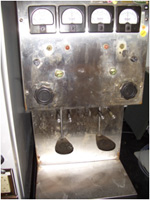
 Argon plasma torch operates at 6000 K to generate population of singly-charged atoms which are passed through sampling and skimming cones into a 10-5 torr vacuum chamber. Ions are passed through a voltage-controlled ion lens into a quadrapole mass spectrometer that continually rasters across the entire elemental mass range. The ions are detected by a dual-range ETP detector having sensitivity from a few counts/sec to millions of counts/sec, allowing a dynamic range that extends from ppt to ppm. The TotalQuant Application allows for rapid semi-quantitation of most elements in the periodic table and automatically corrects for spectral interferences. The Quantitative Analysis application allows for rapid simultaneous quantitation of selected elements.
  Sample Type:
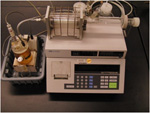
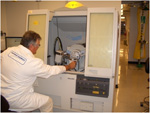
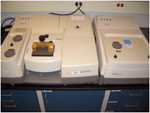
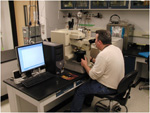 Spectral Ranges: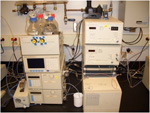

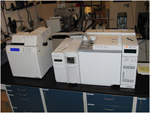 HP 6890N GC and G1888 Head Space Analyzer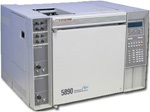
 Gas
Gas Gas
Gas
 Particle and molecule sizes from below a nanometer to several microns Temperature range (°C): 0 - 90
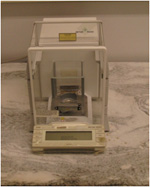 Balances
 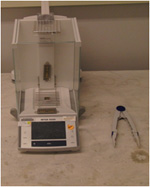 Balance Max (grams) Precision (mg)
 Magnifications:
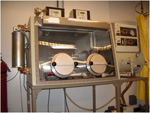 Samples must have a low moisture and oxygen content.