Digital Engineering Adopts 3D VR Tools
VR is a key tool in Northrop Grumman's digital toolkit
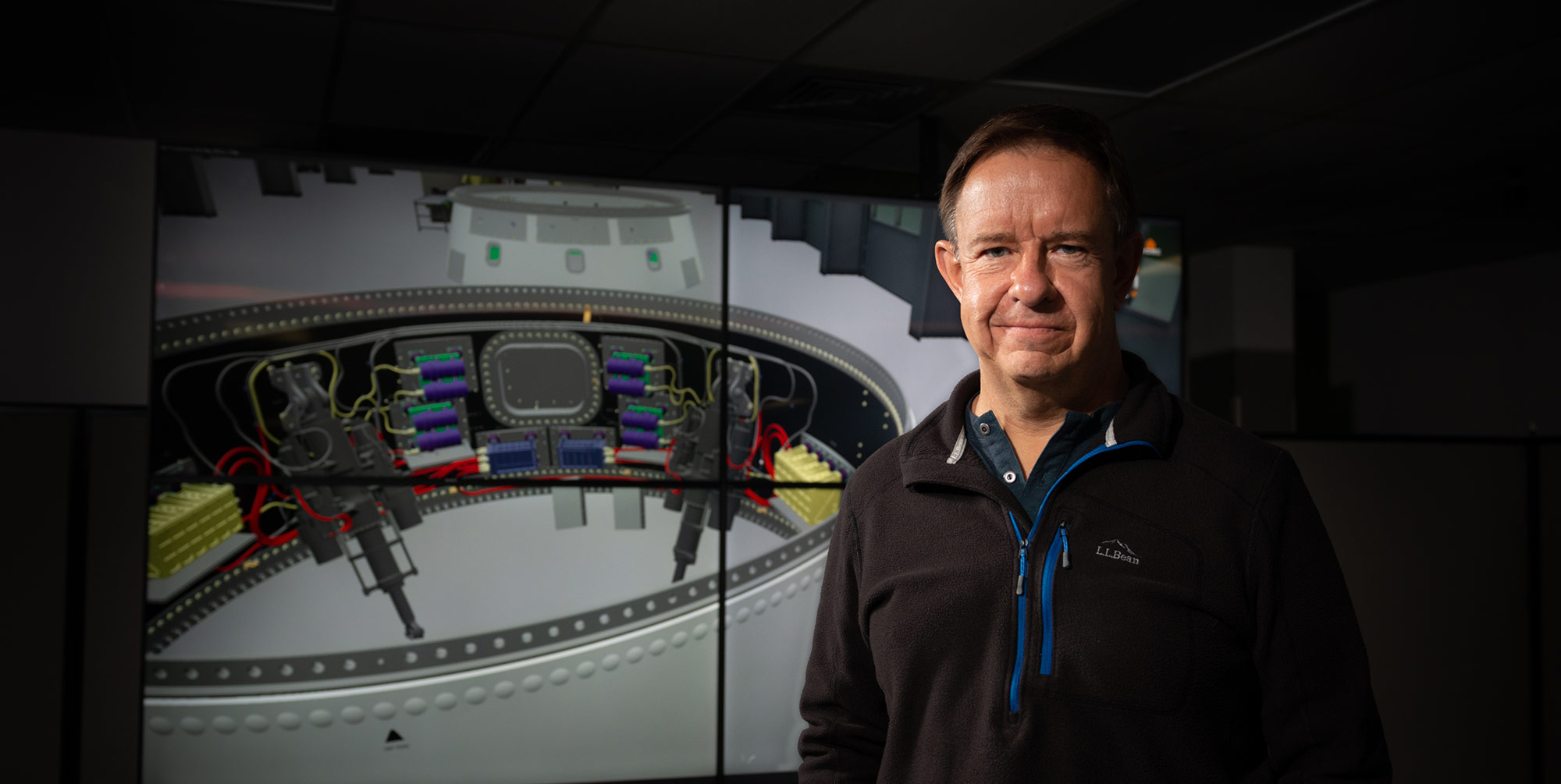
By Tracy Staedter
When virtual reality (VR) was first introduced as a tool for digital engineering, Northrop Grumman staff engineer Jim Maul was eager to experiment. His team, led by Nathan Christensen, manager in engineering, put early VR tools to the test as a way to view rocket propulsion systems. It’s easy to imagine that six years ago, the team found that first-generation VR technology was cost prohibitive, only partially immersive and just not up to the task.
Still, Jim saw the potential of this emerging technology and continued to follow it. With the advent of cost effective consumer-grade VR headsets, the team was ready to give the tools another shot.
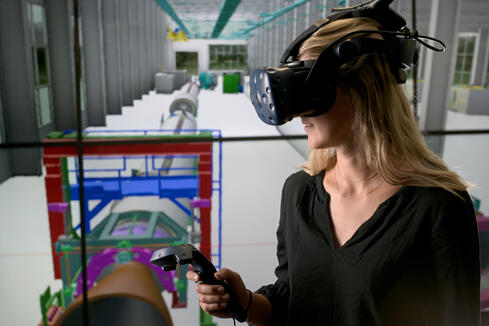
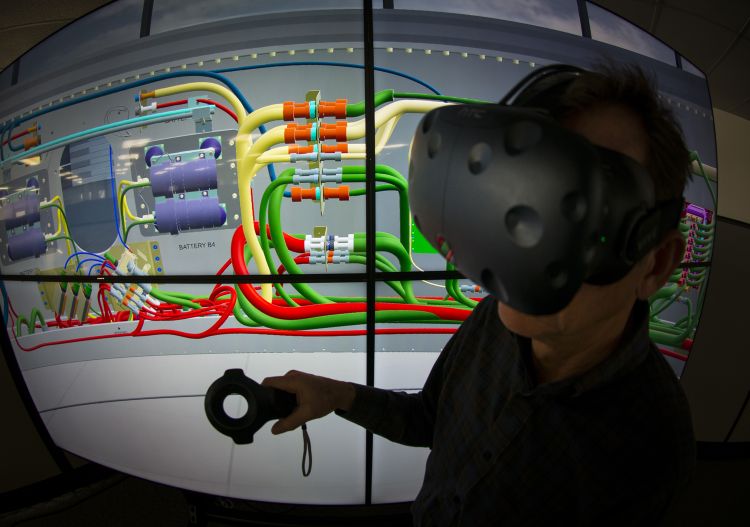
They quickly learned that VR headsets put this Northrop Grumman digital engineering team in immersive, 360-degree experiences and — paired with high-end, commercial software and high-speed graphics computing capabilities — Maul could quickly convert 3D computer aided design (CAD) models to those that could be viewed in a VR environment. Suddenly, Maul, Christensen and their team could, without much effort, inspect life-size models of rocket engines that had so much detail and clarity, they looked real.
Today, years after their first skeptical experimentation, the team considers VR to be a key tool in their digital toolkit.