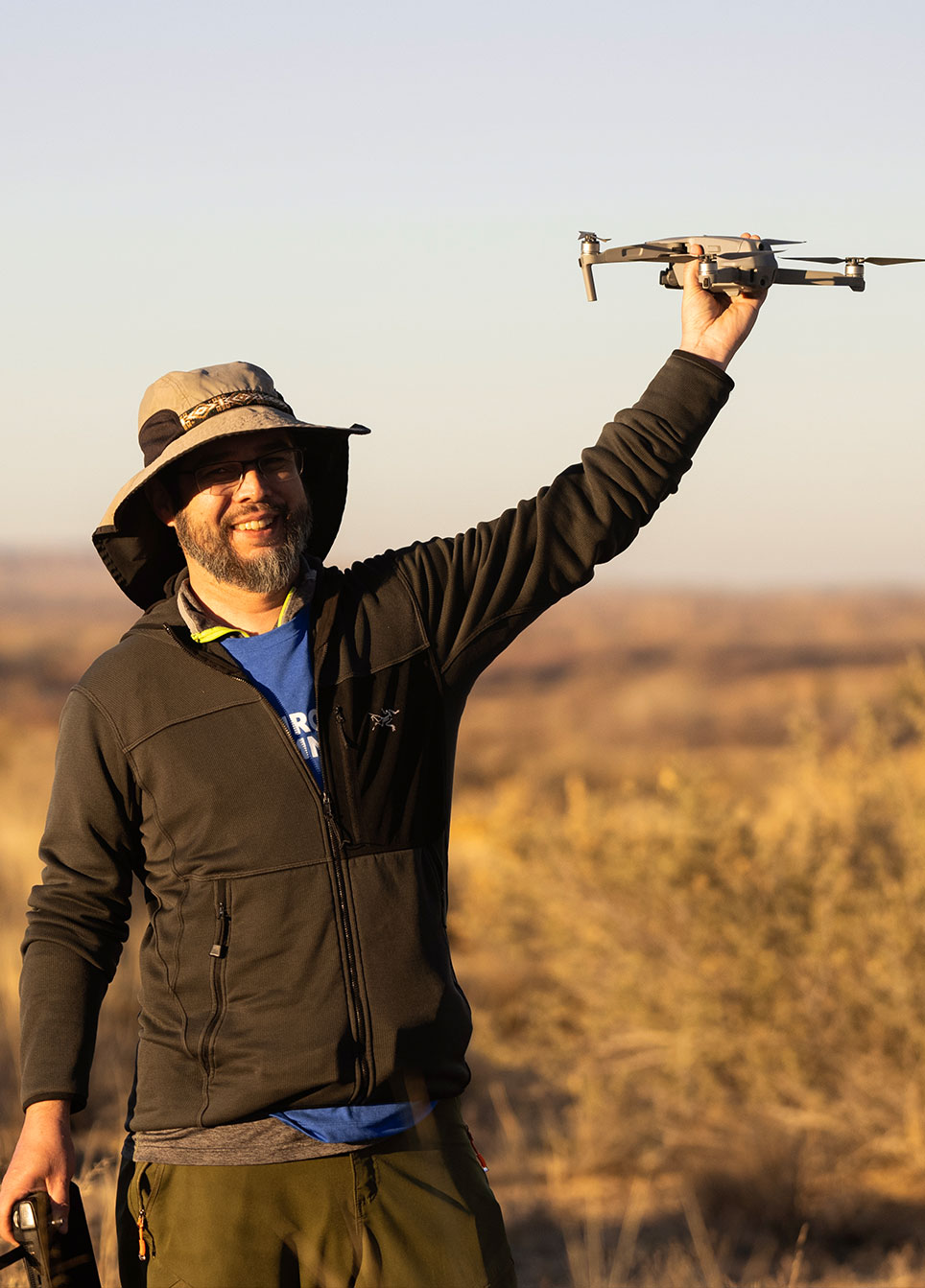
With their partnership established, the SITEs team then worked with NMHC and the New Mexico Historic Sites system to select places to scan starting with Fort Selden, which is located on Apache land. The NMHC has relationships with Native American tribes, including the Apache, to ensure that all cultural preservation work done on-site has the tribes’ full support.
The digital preservation of each site, using photogrammetry and LiDAR, will leave no trace. It will identify the original state of buildings and artifacts as well as meet the audiences of today in digital spaces, where they can go beyond plastic signs fading in the sun and use tools like augmented reality to learn the stories of peoples who used the area.
“So many different narratives converge in New Mexico, where you have thousands of years of human history,” said Bethany. “Having a digital environment provides us with more space to be able to tell those narratives.
”The Fort Selden scan is the initial chapter in the collection of stories that technology will help tell in southern New Mexico. The next site on the team’s list is Sevilleta, New Mexico, which was home to a Pueblo people called the Los Peros. The site is crumbling back into the desert, and without study and digital preservation efforts, the story of the Los Peros could be completely lost.
The data from Fort Selden and, later, Sevilleta, will be used to render 3D, immersive models of the locations. A 3D model walkthrough would support a deeper appreciation for the people and cultures who have long called the sites home.
“Technology is a tool to bring history to life,” said Jennifer. “Technology helps us bring that commitment to shared success to everyone who has a story to tell — past and present.”
Learn more about Northrop Grumman’s commitment to sustainable innovation and environmental, social and governance issues, or explore what life is like at Northrop Grumman.
![Seeing the [Future] Forest Through the Trees](https://ngc-prd-1041-cdn-ejgefqbygwckbxfe.a02.azurefd.net/-/media/wp-content/uploads/22-1378-Bay-Bridge_Hero.jpg?h=1000&iar=0&w=2000&hash=CDFF17AF28523AD4AF927B1EF2CFF5B4 "22-1378-Bay-Bridge_Hero")