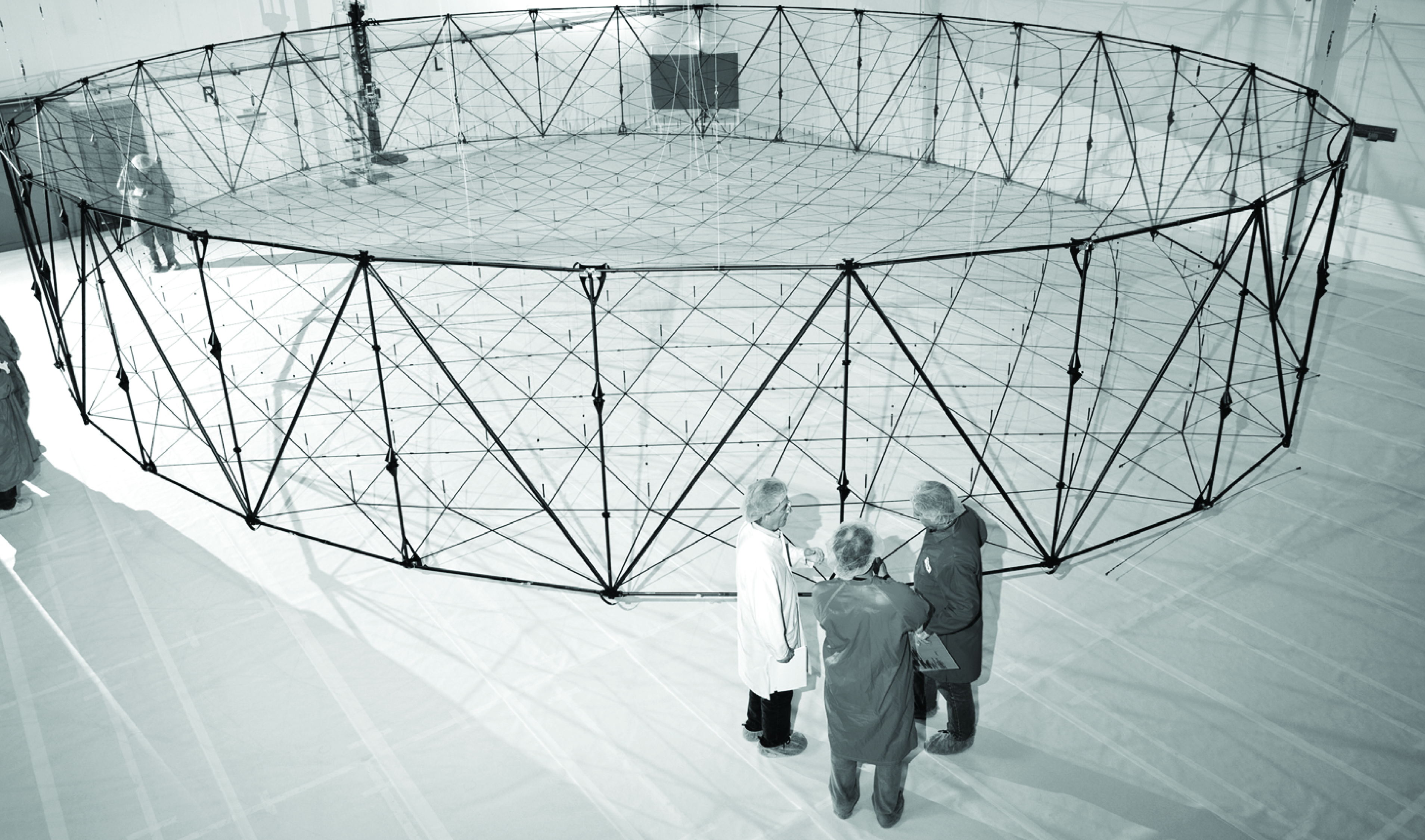
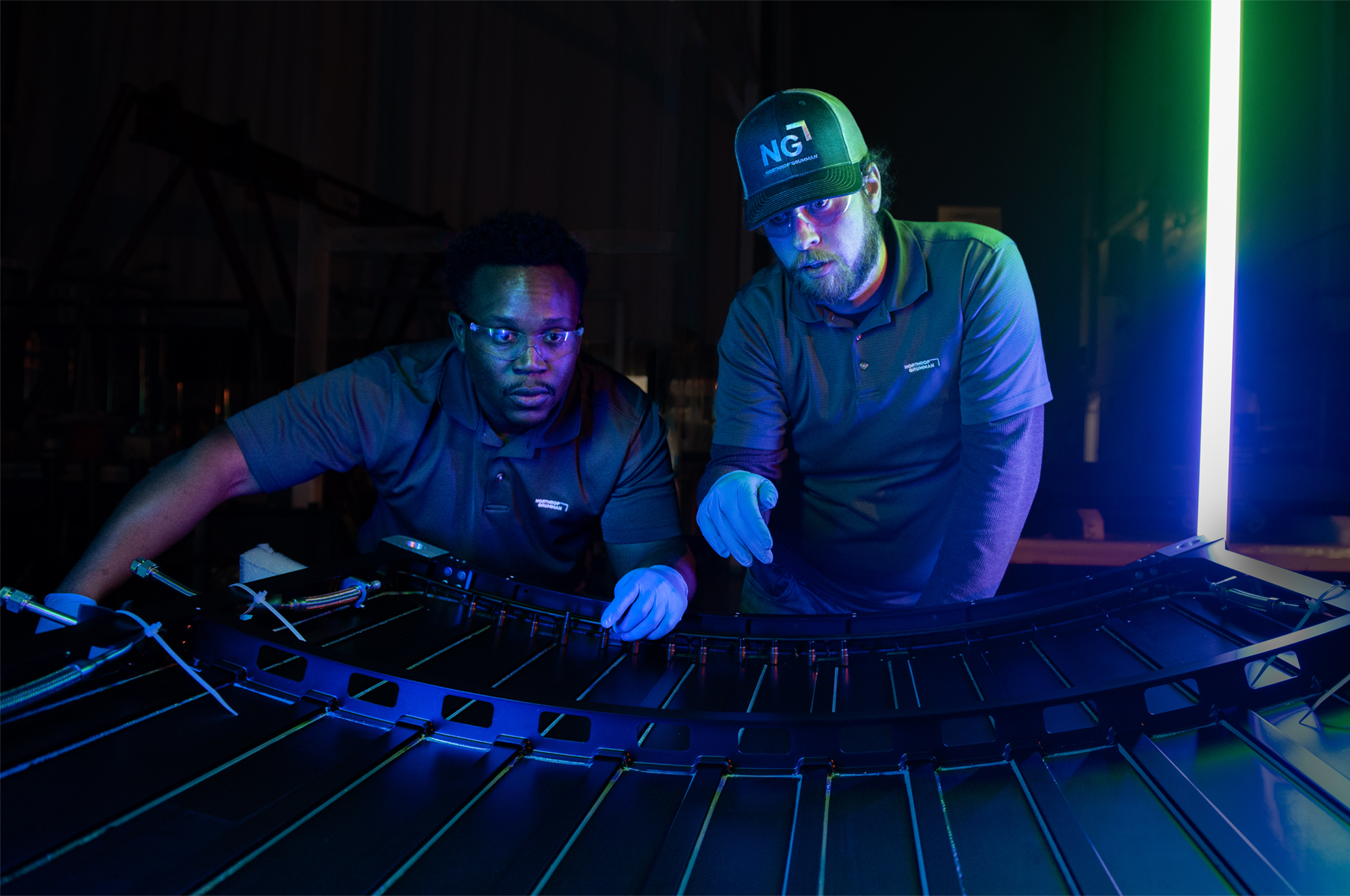
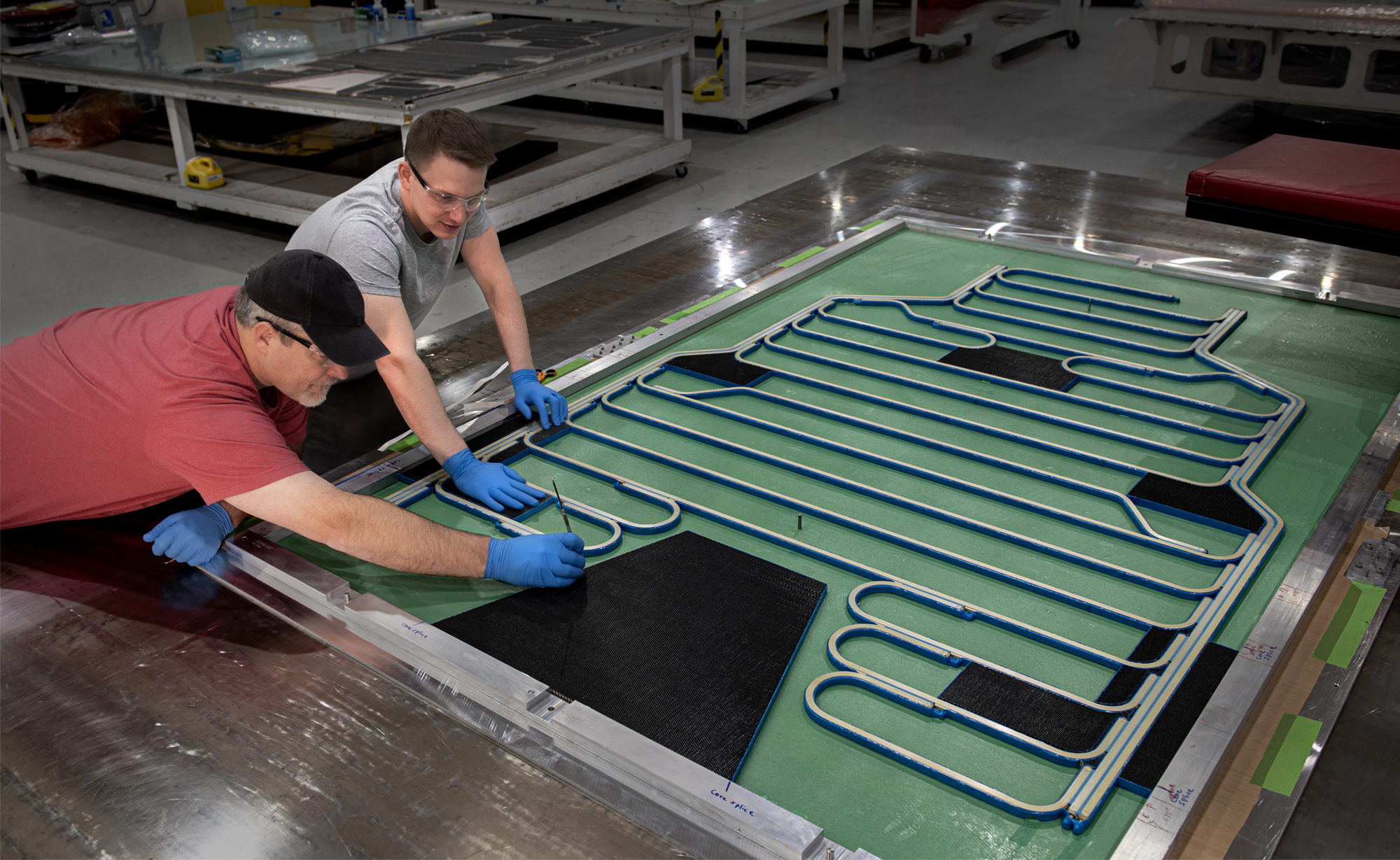
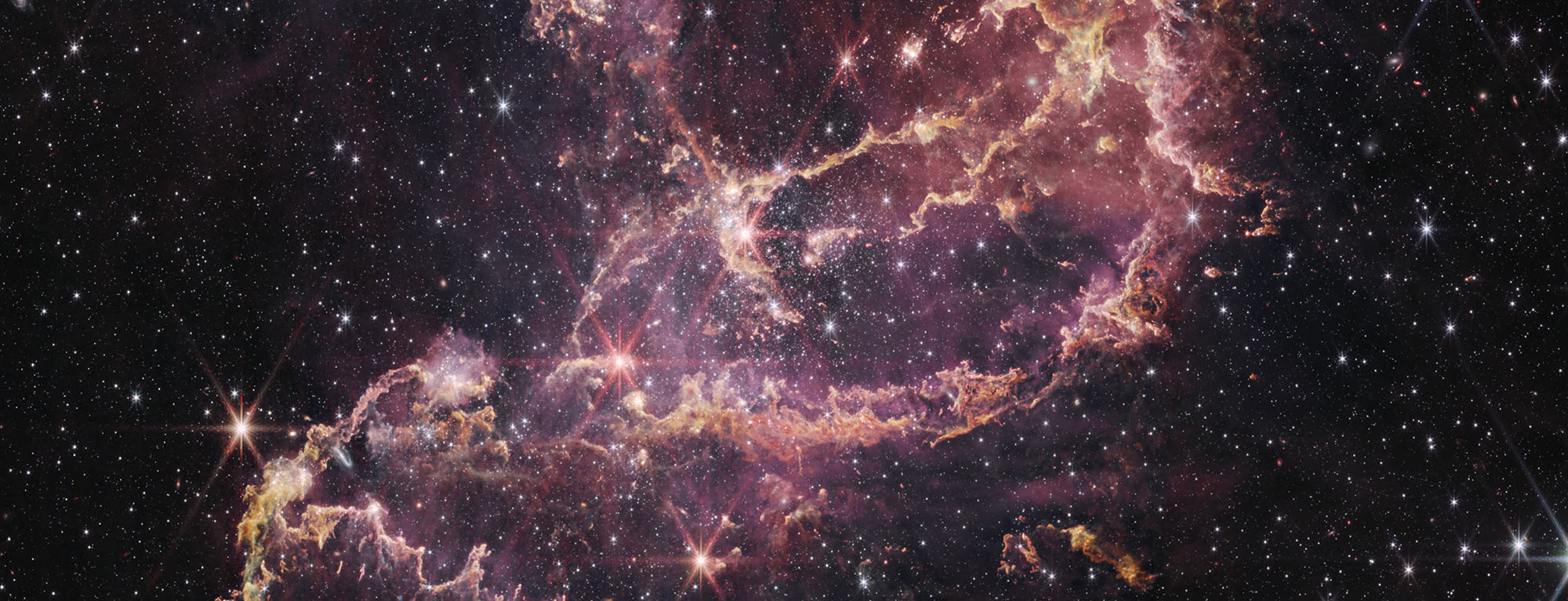
Northrop Grumman is the satellite industry's premier source for mission-enabling, space-qualified deployable booms, masts and backing structures for commercial, military, civil and scientific space programs.
The company has consistently met the challenge to develop deployable solutions for a broad range of large space structure applications, from global mapping and communication antennas and space telescopes to high-sensitivity instrumentation such as particle detectors and magnetometers. With decades of experience in all types of deployable spaceflight structures, Northrop Grumman can quickly devise and deliver an optimal, lowest-risk solution.
We deliver systems that deploy linear panel arrays, membrane surfaces and discrete elements to stringent accuracies with excellent stability. Continue reading to learn more about the many types of systems we have designed, built and tested, which have all flown with 100 percent on-orbit success.
Coilable Booms
In the 40-plus years since its original invention, the coilable boom is unsurpassed for overall performance. Its winning combination of compact stowage, low mass, self-deployability (and therefore minimal nonstructural mass overhead), scalability, placement accuracy and thermal stability make it the preeminent choice for a huge range of in-space deployment applications. Northrop Grumman is constantly refining this foundational technology to serve new applications — for example, coilable booms for the precision deployment of X-ray optics for a number of NASA missions currently in development. Ultra-lightweight carbon fiber versions are enabling a variety of applications, ranging from large membrane deployment (e.g., solar sails and sunshades) to ultra-long-baseline (>80 m) dipole antennas.
Telescoping Booms
Northrop Grumman's telescoping booms provide the highest push-and-pull force (hundreds of pounds) of all linearly deploying structures by means of an internal motor-driven lead screw. The smooth outer surface and internalized mechanism provide robust protection from environmental hazards, including operation by astronauts during EVA on the Space Shuttle and the International Space Station (ISS). These booms are built for ultra-high-cycle life (10,000 deploy/retract) and reliability. Latching joints between each segment provide a stiff, precise preloaded system once deployed. Designs can be optimized for mass, strength and/or placement precision.
Articulating Masts
Northrop Grumman's articulated mast systems are designed and manufactured for the deployment of a variety of critical spacecraft payloads, such as baseline extension for radar antennas and long-focal-length optical systems.
First installed on the International Space Station in 2000, Northrop Grumman's Folding Articulated Square Truss (FAST) Mast technology allows for a compact stowage length (less than eight feet when fully retracted) and more than 115 feet when fully deployed. The FAST Mast canister is designed and qualified to fully retract and deploy the spacecraft's solar arrays 35 times during its expected 15-year on-orbit life.
An evolution of the FAST Mast is the ADAM mast, which has been employed to meet the most aggressive stiffness, strength and stability requirements for linear deployments. Notable applications include the Shuttle Radar Topography Mission (SRTM) and the NuSTAR X-ray imager.
SRTM accumulated a vast trove of global topographic data that is now available to every smartphone user. During an 11-day Shuttle mission, more than 80% of Earth's topography was mapped to 30-m pixel resolution with the help of a 60-meter articulated mast provided by Northrop Grumman.
For NuSTAR, Northrop Grumman designed and built an ADAM mast system, as well as the extremely thermally stable optical bench and tip adjustment mechanism, used to support the X-ray telescope's 10-meter focal length. NuSTAR will be the first focusing high-energy X-ray mission, opening the hard X-ray sky to the search for black holes, mapping supernova explosions and studying the most extreme active galaxies.